
Last updated November 16, 2026
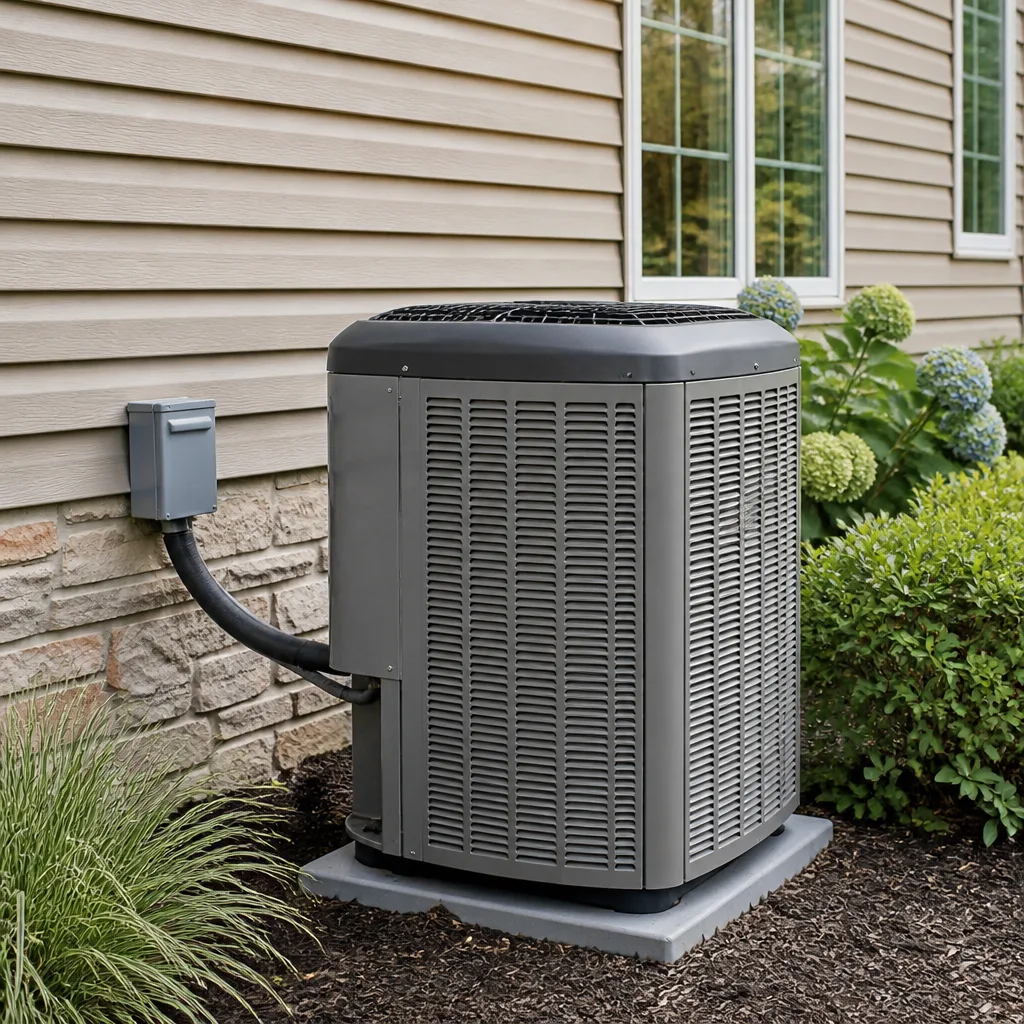 AC repair
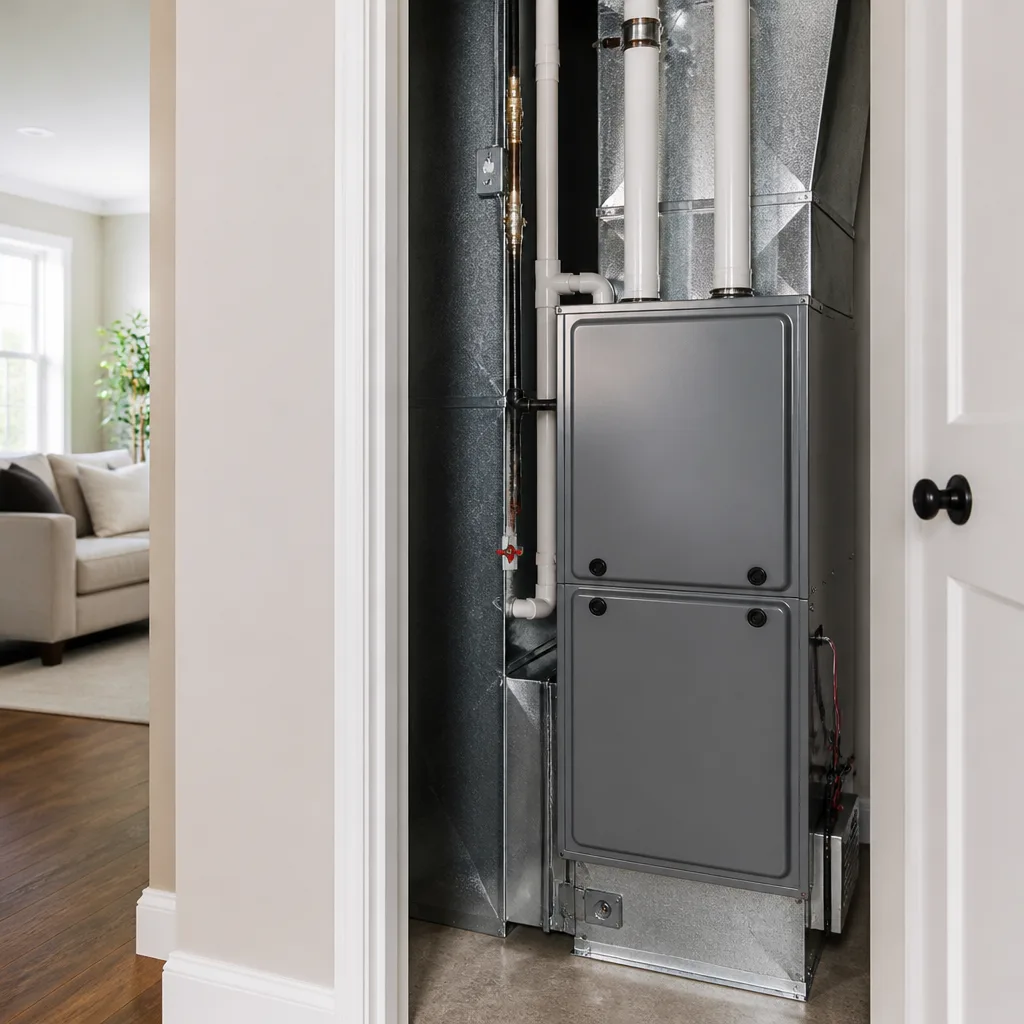 Furnace & heating
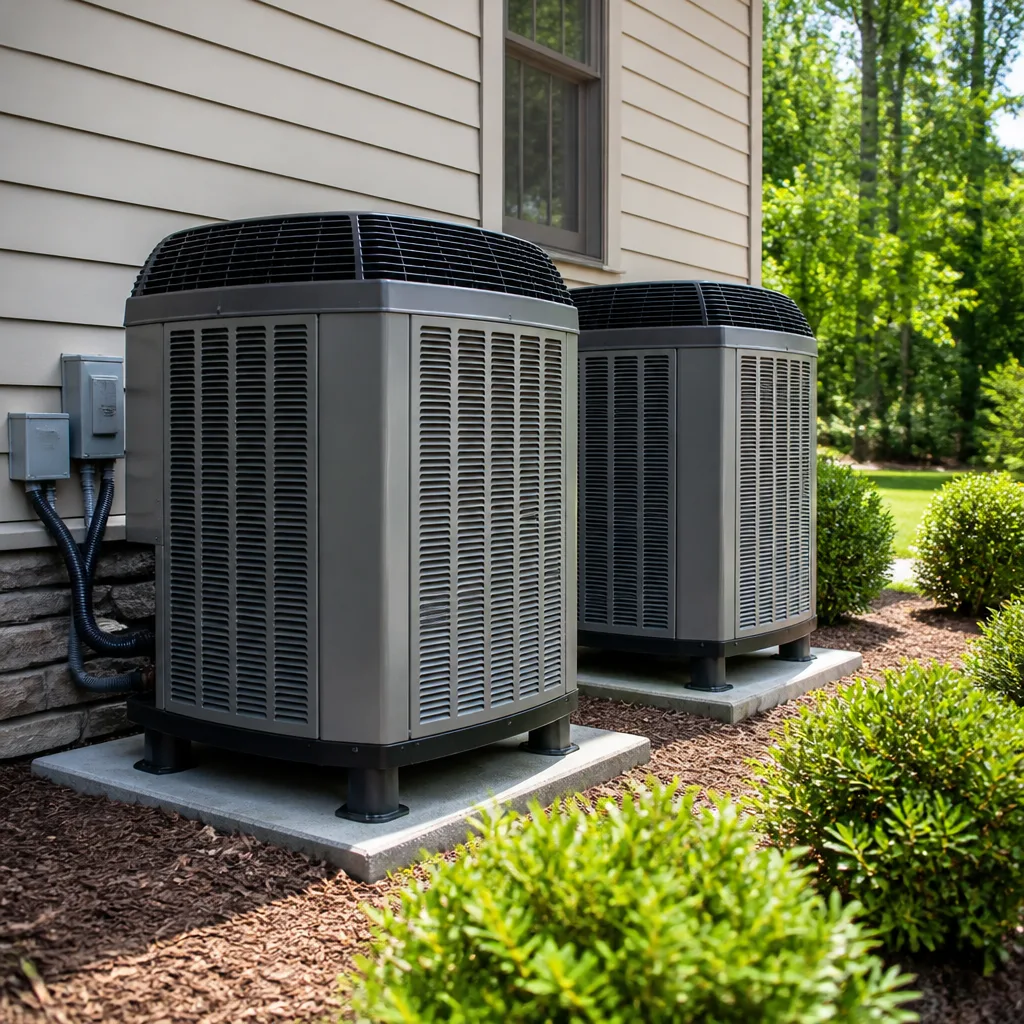 Heat pumps
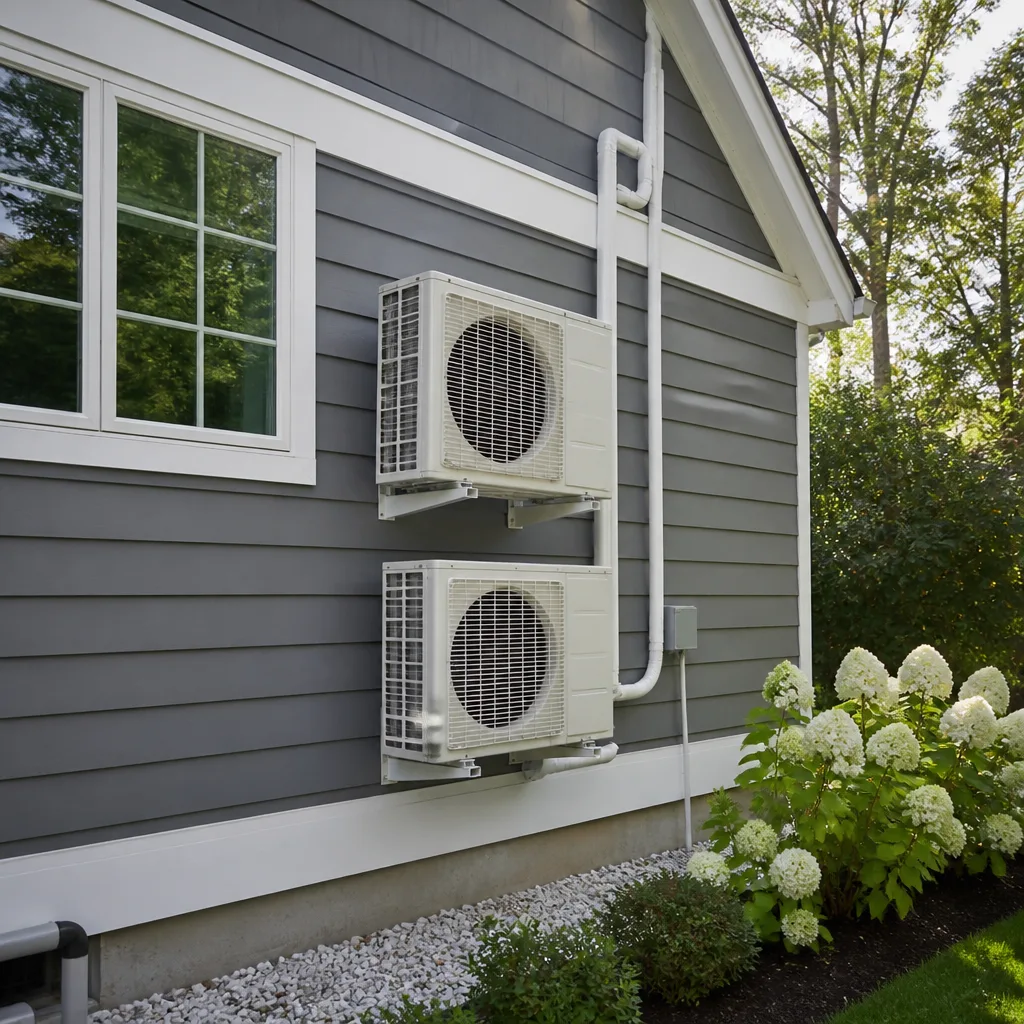 Ductless mini splits
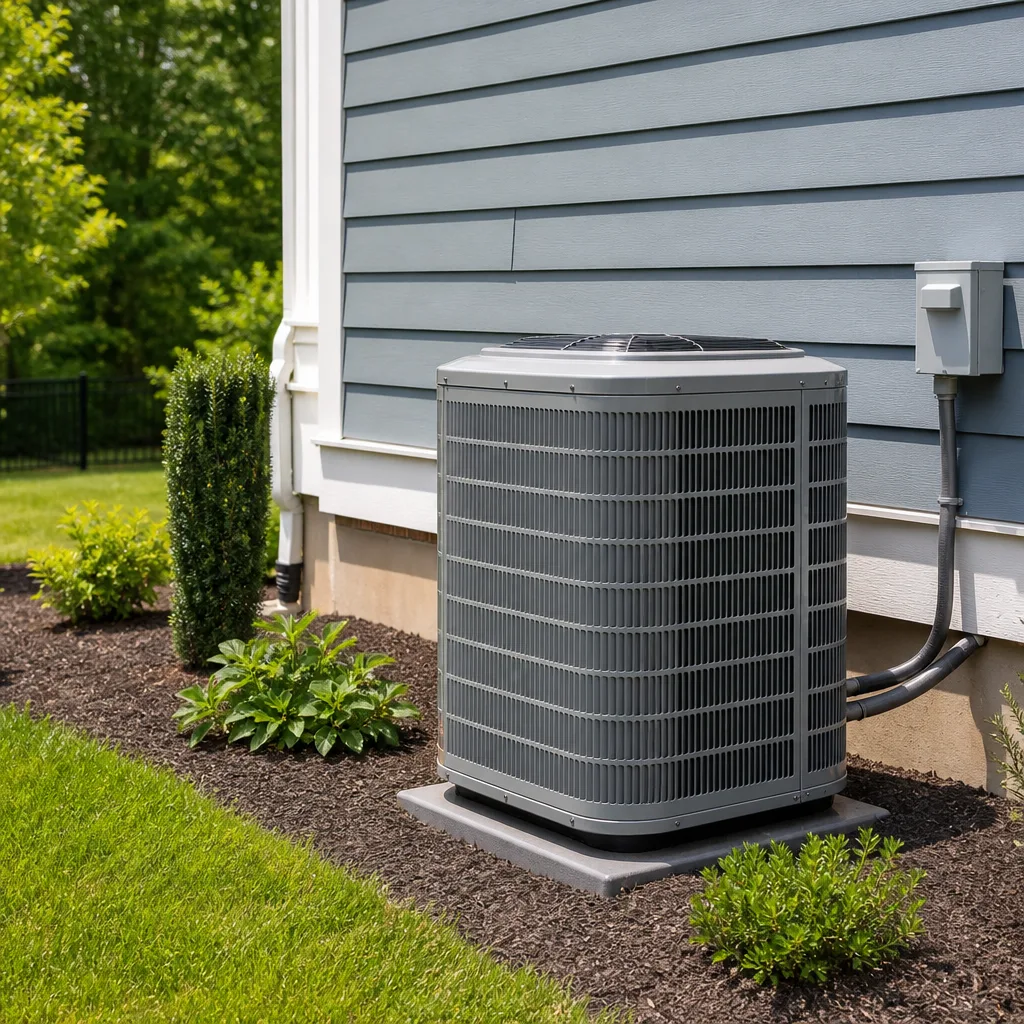 Carrier
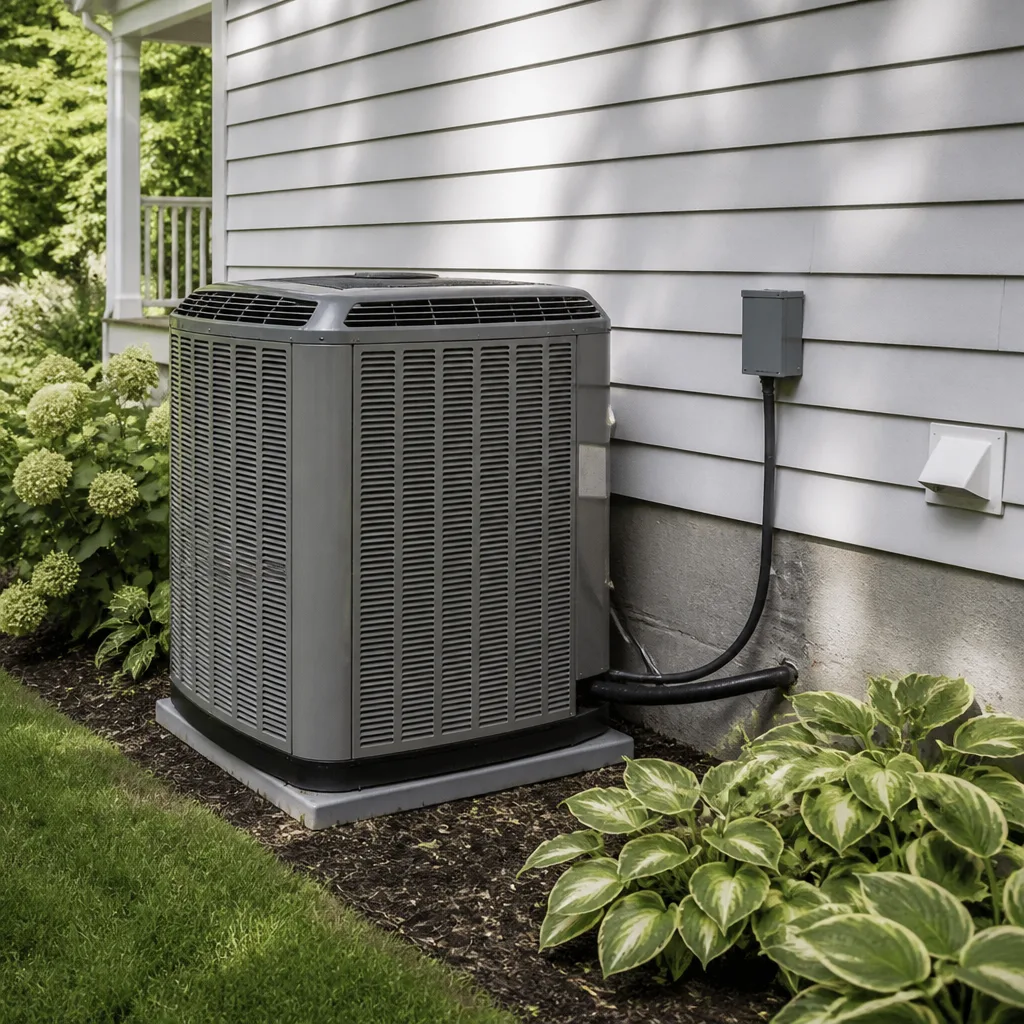 Trane
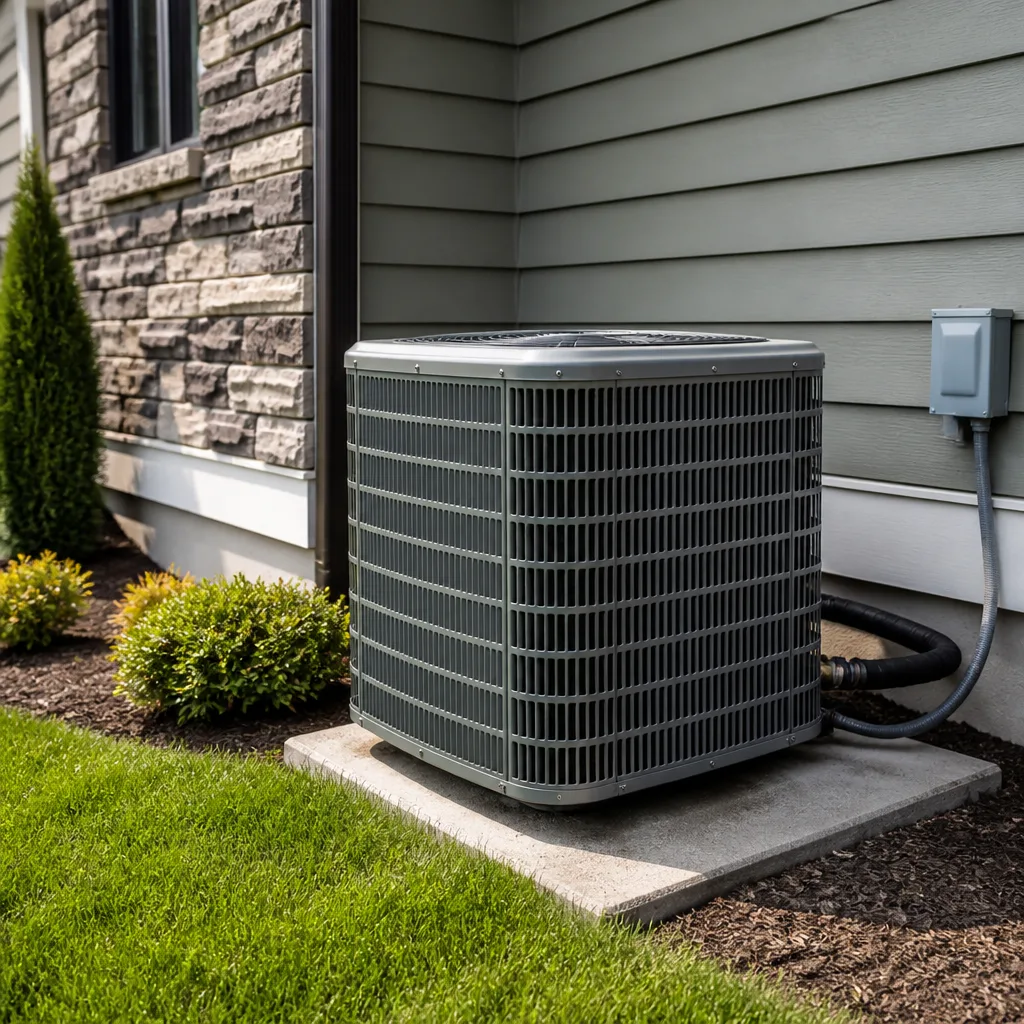 Goodman
Seasonal tune-up and full diagnostic on your Carrier, Trane, or Goodman system - readings shown to you before any repair is proposed
Diagnosis first, numbers second - you approve the repair price before a single part goes in.
Get your free estimateHow to Hire an HVAC Contractor in Allen: A Step-by-Step Guide
The worst time to choose an HVAC contractor is the moment you need one most. In Allen, that moment tends to arrive in July or August, when the temperature climbs past 100°F, the house stops cooling, and every decision gets made under pressure. The city’s rapid build-out left a large inventory of systems approaching replacement age at the same time, and that volume has drawn contractors of wildly uneven quality into the market. Some are excellent. Some price low, subcontract the actual work, and disappear when the warranty claim comes. This guide gives you a vetting framework built on what licensed specialists actually check, so you can tell the two apart before you sign anything.
Quick Answer
To hire an HVAC contractor in Allen, verify the company’s TACL license through the Texas Department of Licensing and Regulation, confirm in writing whether the crew doing the work is employed or subcontracted, insist on a Manual J load calculation before any equipment is sized, and require a written scope of work that names equipment models, permit responsibility, and warranty terms. Get at least three bids, and treat any same-day pressure to sign as a reason to walk away.
Styles & brands we work with
- AC repair
- Furnace & heating
- Heat pumps
- Ductless mini splits
- Carrier
- Trane
- Goodman
Table of Contents
- Step 1: Verify the Contractor’s TACL License
- Step 2: Find Out Who Actually Does the Work
- Step 3: Demand a Manual J Load Calculation
- Step 4: Structure a Written Scope of Work
- Step 5: Read the Red Flags Specific to Allen’s Market
- Step 6: Compare Bids on the Same Line Items
- Step 7: Match the Contractor to Your Equipment Brand
- Common Mistakes to Avoid
Step 1: Verify the Contractor’s TACL License
In Texas, HVAC work is regulated through the Texas Department of Licensing and Regulation, and the credential you’re looking for is a TACL license: a Texas Air Conditioning and Refrigeration Contractor license. Any company advertising HVAC installation or repair in Allen should be able to give you that number without hesitation. If you have to ask twice, that’s your first data point.
Here’s what the license number actually tells you, and it’s more than most homeowners realize. A TACL license confirms the company has met the state’s requirements and is authorized to contract for air conditioning and refrigeration work. It covers the business entity, not just the individual technician. That matters because a company can have a licensed technician on staff while the business itself operates without proper licensing, and the homeowner bears the risk in that arrangement.
To verify, pull up the TDLR license search on your phone while the estimator is standing in front of you. Enter the number and confirm three things:
- The name matches. The licensed entity should be the same company name on your written estimate, not a parent company or a trade name you’ve never heard of.
- The status is active. An expired or suspended license tells you the contractor isn’t currently in good standing with the state.
- The scope of work is covered. Air conditioning and refrigeration contracting is the category that applies to residential HVAC work. A license in an unrelated category doesn’t cover what they’re proposing to do to your system.
Ask also for proof of insurance at the same time. A legitimate Allen HVAC contractor carries liability insurance and workers’ compensation coverage. If an uninsured technician is injured on your property, the exposure lands on your homeowner’s policy. A licensed, insured company removes that question entirely.
Our technicians have up to 11 years of experience, and every job we take on is held to the Highpoint AC Repair standard: the work is done to a defined completion bar, not just to functional. That’s the kind of claim you should expect every contractor to back up with paperwork rather than a verbal promise.
Step 2: Find Out Who Actually Does the Work
This is the question most homeowners never ask, and it’s the one that causes the most grief. A contractor can quote you a fair price, schedule the job, and then hand the installation to a separate crew you’ve never spoken to. When the system underperforms the following summer, the company that sold it points at the crew, and the crew is no longer answering the phone.
Subcontracting isn’t automatically bad. Large commercial work runs on it routinely. But for a residential furnace replacement or a full AC installation, you should know the arrangement before you sign, because it changes who stands behind the workmanship.
Ask directly, and ask early in the conversation: “Will the people installing my system be your employees or a subcontractor?” Then listen for a clear, direct answer. Here’s how to read the response:
- A straightforward “our own employees” is the cleanest answer. You get one accountable company for both the sale and the workmanship.
- “We use a vetted installation partner” means subcontracting. Ask for that partner’s company name and TACL license, and verify it the same way you verified the sales company.
- “We’ll figure that out once we see the job” is evasive. It usually means the company doesn’t have a fixed crew and fills jobs from whatever labor is available.
- “Don’t worry about it” is a reason to keep interviewing.
Get the answer in writing in the scope of work. A one-line clause naming who performs the installation protects you far more than you’d expect, especially when a warranty claim arises in year three and you need to know whose labor guarantee applies. In our experience, homeowners who ask this question early in the process get a much clearer picture of what a company actually is.
The related concern is follow-through. A contractor who installs one brand of equipment and won’t touch another leaves you hunting for a second company when you need service on equipment they don’t sell. Before you commit, ask whether the company handles both new installation and ongoing repair, and whether that covers heating and cooling together. One call covering both sides of the system means you never have to explain your setup to a new contractor mid-panic.
Step 3: Demand a Manual J Load Calculation
Any contractor who sizes a new system without measuring your house is guessing. The industry standard for that measurement is a Manual J load calculation, and it is the single strongest indicator of whether you’re talking to a professional or a salesperson.
A Manual J calculation determines the correct cooling and heating capacity for your specific home by accounting for square footage, window area and orientation, insulation levels, ceiling height, air infiltration, and the local design temperature. Two houses of identical square footage can need noticeably different equipment capacities once those variables are in play. A system that’s oversized for the house will cycle on and off too often, struggle to remove humidity, and wear out faster. A system that’s undersized will run continuously on the hottest Allen afternoons and never quite catch up.
What a legitimate load calculation looks like in practice:
- The estimator takes real measurements inside the house, including windows and door openings, not just a walkthrough glance at square footage.
- The data gets entered into load calculation software, and the software output is shared with you, even if only as a summary sheet.
- The recommended equipment capacity traces directly back to that calculation, and the technician can explain why that tonnage fits your home.
- Duct design gets evaluated too, because even correctly sized equipment can’t deliver capacity through undersized or leaky ductwork.
If a contractor quotes you a replacement based on matching the size of the old unit, that’s a shortcut rather than a calculation. The old unit may have been wrong for the house its entire life. Ask for the Manual J output before you sign, and treat a refusal to provide it as a signal about how the rest of the job will go.
Our multi-brand work means technicians arrive already familiar with how different manufacturers scale equipment, from a Daikin system in a newer build to a Bryant unit in an older Allen home. That preparation is exactly what a proper load calculation process should complement, not replace.
Step 4: Structure a Written Scope of Work
A verbal estimate is an invitation to dispute later. A written scope of work is the document that protects you if the job runs long, parts change, or a warranty claim arises two years down the road. Any reputable contractor supplies one without being pushed, and getting these details into writing at the estimate stage costs you nothing.
Here’s what a solid scope of work for an AC installation or furnace replacement should contain:
- The equipment model number. Not a brand name and a tonnage, but the specific model number of every component being installed, including the air handler, condenser, thermostat, and any coils. Write it down and confirm it matches what gets delivered on install day.
- The load calculation summary. A reference to the Manual J result and the capacity it specifies, so the equipment sizing is documented.
- The permit responsibility. Most cities require a permit for a system replacement, so ask your city’s building department and confirm which party on the contract pulls it. A contractor who suggests skipping the permit is inviting code and resale trouble later.
- Who performs the installation. The subcontracting answer from Step 2, written down.
- The labor warranty terms. How long the labor is covered, what voids it, and how claims are filed. Equipment manufacturers carry their own warranties, but the labor guarantee is the contractor’s own promise.
- The change order process. What happens if the technician finds a cracked evaporator coil or an undersized return duct mid-installation. You want an agreed rule for approving any additional cost before the work continues, not a call mid-job with a revised invoice.
- The completion standards. What the contractor will verify before they call the job done: static pressure, refrigerant charge at the specified conditions, airflow through each room, and a demonstration of the thermostat and system operation.
Two contractors quoting the same installation can produce scopes that differ by a full page of detail. That difference is the job. Read both carefully before you decide, because the cheaper bid often wins by omitting the items your protection depends on.
Step 5: Read the Red Flags Specific to Allen’s Market
Allen’s rapid growth created a concentration of HVAC businesses competing hard for a large pool of replacement jobs. Most are honest, but the volume also attracts operators who sell well and deliver thin. Three patterns come up often here.
Quotes that land far below every other bid
When four bids cluster in one range and a fifth comes in dramatically lower, the fifth isn’t a better deal, it’s a different job. Lower pricing on a multi-brand system often reflects a smaller crew, skipped load calculation, recycled equipment, or a subcontractor paid per job rather than for outcomes. Ask the contractor what accounts for the gap: if the answer is vague, the missing value is in the parts and labor you won’t see until the warranty call.
Refusal to pull permits
A permit is inconvenient for a contractor, but it’s the mechanism that ensures the installation meets code and gets inspected. Any contractor who suggests the permit isn’t necessary is telling you to trust their work over an inspection. On an Allen system replacement, the permit question is non-negotiable.
Same-day pressure to sign
A system that fails in July is genuinely urgent, which is precisely what makes this a common sales tactic. If a company insists the quoted price expires today, or that they need a deposit right now to hold the job, ask to take the paperwork home. A contractor who expects to be running an honest business will be there tomorrow. The larger the dollar amount, the less sense any same-day deadline makes.
Warning signs that keep coming up
- No written estimate, or an estimate that doesn’t name specific equipment models.
- Inability to explain the load calculation, or sizing based on the old unit.
- Warranty terms that only cover the manufacturer’s equipment, with nothing for labor.
- An estimate produced without anyone measuring anything inside the house.
Step 6: Compare Bids on the Same Line Items
Three bids are better than two, and five is fine. The trick is comparing them properly. Two estimates can look identical at the headline price while differing on every material detail underneath.
Rebuild each bid into the same format before you decide. This is how a specialist looks at competing proposals:
- Match equipment tier to equipment tier. A quote for a builder-grade unit and a quote for a mid-tier unit aren’t comparable. Ask each contractor to price a mid-tier system as well as their entry option.
- Separate equipment cost from labor and permit cost. Two contractors might quote the same total with very different splits, and the split tells you where the value is going.
- List what’s included and excluded. Duct modifications, the condensate drain, new refrigerant lines, the thermostat, and a new disconnect all live at the margin. Build a single comparison list that shows each one for each bid.
- Record the warranty length for both equipment and labor. A longer labor warranty is often worth a small difference in headline price.
- Note how each contractor responded when you asked about load calculation and permitting. The answer is part of the bid, not separate from it.
If one bid looks meaningfully better than the others, ask its author to walk you through the scope line by line before you commit. A contractor comfortable defending their proposal in detail is generally a contractor who will defend their work later. Prices for furnace replacement and AC installation are set per job by a written estimate, so the scope of work is the document that actually determines your final cost.
Step 7: Match the Contractor to Your Equipment Brand
There are many HVAC brands and thousands of model variations, and a contractor who deals in one brand gets very good at that one system. The downside for the homeowner is that a single-brand dealer may be unfamiliar with how another make fails, what its specific parts cost, or which manufacturer service bulletins apply. Multi-brand knowledge is preparation, and it shows up on the first visit.
Ask whether the contractor regularly services your specific make. If your system is a Carrier, checking whether they carry Carrier diagnostic knowledge matters more than the brand logo on their website. The same applies if your equipment is a Trane, Lennox, Goodman, Rheem, York, Daikin, Bryant, or American Standard system. A contractor who works across several of these brands will recognize common failure modes from memory instead of learning them on your unit. For furnace repair, a brand-familiar technician also tends to diagnose faster, which matters when the house is cold and the problem is still unidentified.
Before you hire, ask two questions: which brands does the contractor work on, and can they walk through how they’d diagnose a no-cooling problem on your particular make? The second question is the honest one, because it separates a company that advertises broad brand coverage from a technician who genuinely knows each manufacturer’s equipment. Preparation is not something you can fake through a sales call.
One more check: whether the company covers heating and cooling together. A contractor who only sells cooling systems will need to hand you off to a second company for furnace repair. One contractor covering both means you’re not explaining your system twice each year.
Common Mistakes to Avoid
- Hiring on price alone. The cheapest bid on a replacement system usually comes from a scope that’s missing load calculation, permitting, or a labor warranty. The savings get absorbed three years later, and the homeowner writes the check.
- Treating “no permit needed” as a favor. Skipped permits create code and resale issues. When you sell an Allen home, an unpermitted system replacement can become a disclosure item and a buyer objection.
- Not asking who installs the system. A subcontractor can do excellent work, but only if the contracting company has vetted that partner and stands behind the labor. Get the answer in writing.
- Accepting equipment sizing without a load calculation. Sizing a new system by matching the old unit risks repeating the previous mistake. A slightly oversized system on a hot Allen afternoon will short-cycle, and the homeowner pays for it twice.
- Letting a verbal promise substitute for a written scope. Whether the thermostat is included, whether the condensate drain gets replaced, and whether the old unit removal is included all need to be in the document. A verbal promise disappears with the salesperson.
- Calling during the first heat wave of the season. Wait times peak in Allen the moment summer arrives. If you can schedule an inspection or a repair in the shoulder season, you’ll avoid the queue and get a less hurried technician.
- Overlooking the warranty filing process. Equipment manufacturers register warranties at installation, usually shortly afterward. Ask the contractor to handle that registration and to give you the confirmation. It’s a small part of the job with large consequences if it slips.
See the difference
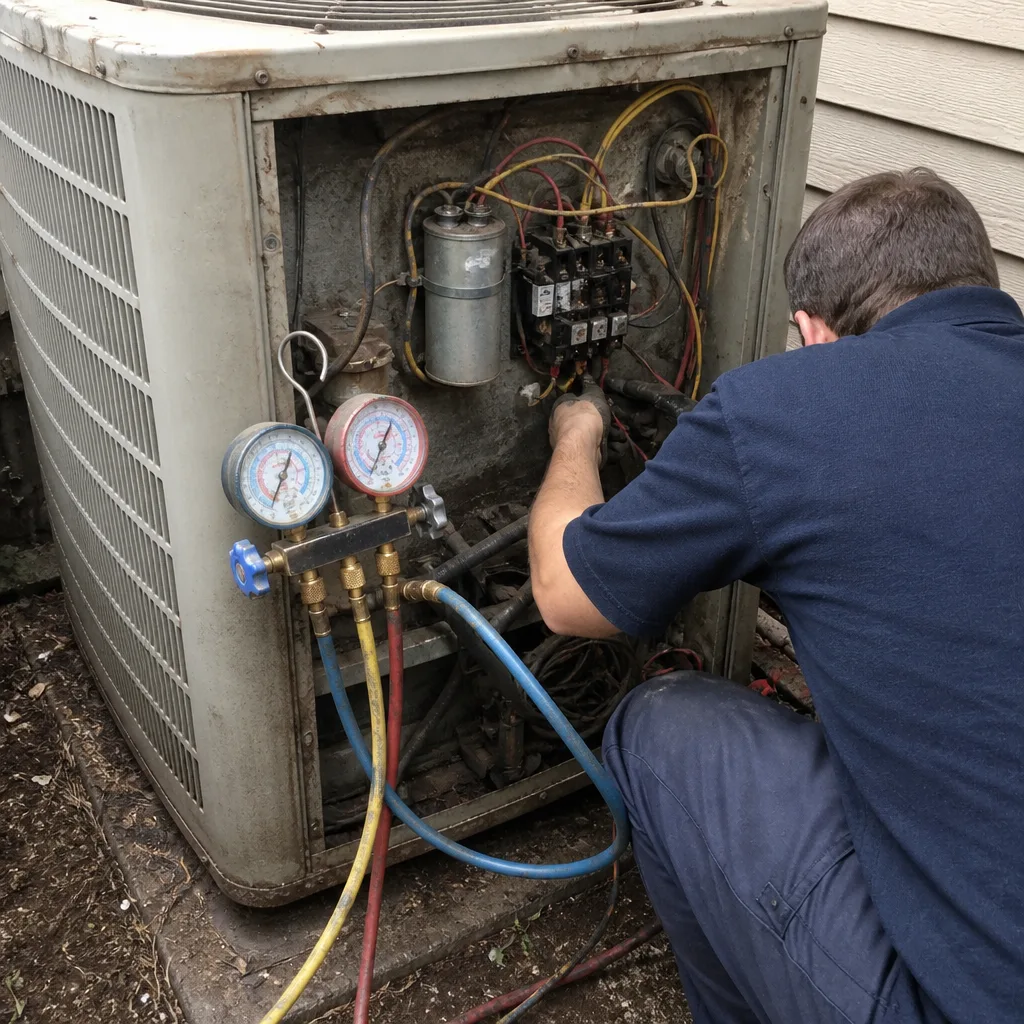 Before
 After
 Before
 After
 Before
 After
When to Call a Professional
Some HVAC issues are genuinely urgent and some aren’t, and telling them apart is worth doing before the next breakdown. Call a professional immediately if you smell gas anywhere near the furnace or water heater, if the breaker trips repeatedly when the system starts, if you see scorch marks or melted wire insulation at the electrical disconnect, or if the blower runs but neither heating nor cooling arrives for hours. Electrical panels and furnace gas lines are not homeowner territory; those are genuinely dangerous components, and a trained technician is the only person who should open them.
Call for a diagnosis if the system is cooling poorly, running longer than usual, or making a new noise. Call to schedule routine inspections before summer arrives. And if you’re starting a replacement, call for a free estimate so you can compare a written scope against the framework in this guide.
Highpoint AC Repair offers free estimates in Allen. For installation or repair, call (855) 752-3431. We answer 24/7. Fast dispatch from 7am to 7pm, Sunday through Friday.
Frequently Asked Questions
Verify the contractor’s TACL license through the Texas Department of Licensing and Regulation’s online lookup. Ask the company for its license number, search it while the estimator is present, and confirm the name matches the estimate, the status is active, and the license covers air conditioning and refrigeration contracting. Also request proof of liability insurance and workers’ compensation at the same time. If the number doesn’t appear or the name is different, don’t sign anything. Call us at (855) 752-3431 for an estimate, and we’ll walk you through how to verify our credentials as well.
Installation cost in Allen varies with the home, not the neighborhood. Differences come from the load calculation, the home’s window area and orientation, insulation levels, duct condition, attic access, refrigerant line runs, and the equipment tier selected. Two houses in the same Allen community can need different equipment capacities and very different duct modifications. That’s why a written scope of work with a Manual J summary is the document that determines final cost, not a per-square-foot rule of thumb. Call (855) 752-3431 for a free estimate and we’ll quote the actual job.
A Manual J load calculation is the industry standard method for determining the correct heating and cooling capacity for a specific home, based on measurements of windows, insulation, ceiling height, air infiltration, and local design temperature. Yes, you need one before any system replacement. A contractor who skips it and matches the old unit’s size is guessing, and an oversized system will short-cycle, struggle with humidity, and wear out faster. Ask for the Manual J summary in writing before you commit. Call (855) 752-3431 for an estimate that includes one.
Yes, same-day repair is often available in Allen. Fast dispatch from 7am to 7pm, Sunday through Friday. Call (855) 752-3431 to check availability. We answer 24/7, and a call outside dispatch hours is booked into the next opening. For a no-cooling or no-heat situation in the middle of summer or an early cold snap, treat it as urgent and call right away. The sooner you call, the more likely a same-day slot stays open.
Repair makes more sense when the system is mid-life, the failure is a single component, and the repair cost is a small fraction of replacement. Replacement makes more sense when the equipment is nearing the end of its service life, repairs are recurring, or efficiency losses are driving high utility bills. Age alone isn’t the deciding factor; the condition of the heat exchanger, compressor, and ductwork matters more. Get a written diagnosis before deciding. Call (855) 752-3431 for a free estimate on both repair and replacement so you can compare.
A proper written estimate should include the specific model number of every component being installed, the Manual J load calculation summary, the permit responsibility, who performs the installation, the labor warranty terms, the change order process, and the completion standards. Verbal promises don’t count. If two bids have the same headline price but very different scopes, the difference is the job. Call (855) 752-3431 for a free estimate with full documentation, and we’ll help you read it clearly.
The Bottom Line
Hiring an HVAC contractor in Allen comes down to verification. Check the TACL license through TDLR, confirm who performs the work, and insist on a Manual J load calculation before any equipment is sized. Then get a written scope of work that names equipment models, permit responsibility, warranty terms, and the change order process. Get three bids and compare them line by line, not by headline price. Treat any same-day pressure to sign, any refusal to pull a permit, and any quote far below every other bid as reasons to slow down. The few hours you spend verifying a contractor are worth far more than the weeks you’d spend chasing one who wasn’t.
Highpoint AC Repair handles AC installation, furnace replacement, and furnace repair for homeowners across Allen. We work on Carrier, Trane, Lennox, Goodman, Rheem, York, Daikin, Bryant, and American Standard equipment, so we’re already familiar with your system when we arrive. We service Allen and the surrounding area with one call covering heating and cooling. Call (855) 752-3431 for a free estimate. We answer 24/7. Fast dispatch from 7am to 7pm, Sunday through Friday. Our technicians have up to 11 years of experience, and every job is held to the Highpoint standard.
Written by the team at Highpoint AC Repair.