
Last updated November 16, 2026
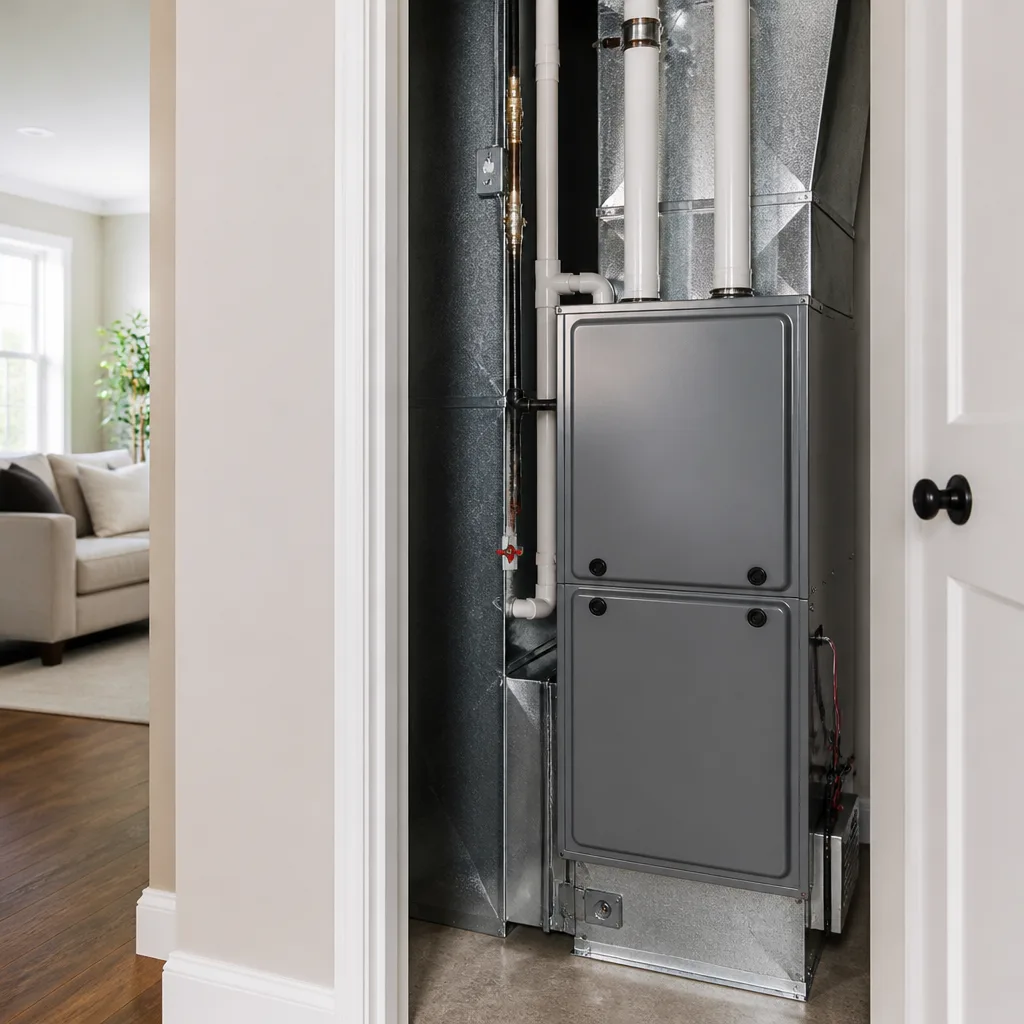 Furnace & heating
 AC repair
 Heat pumps
 Ductless mini splits
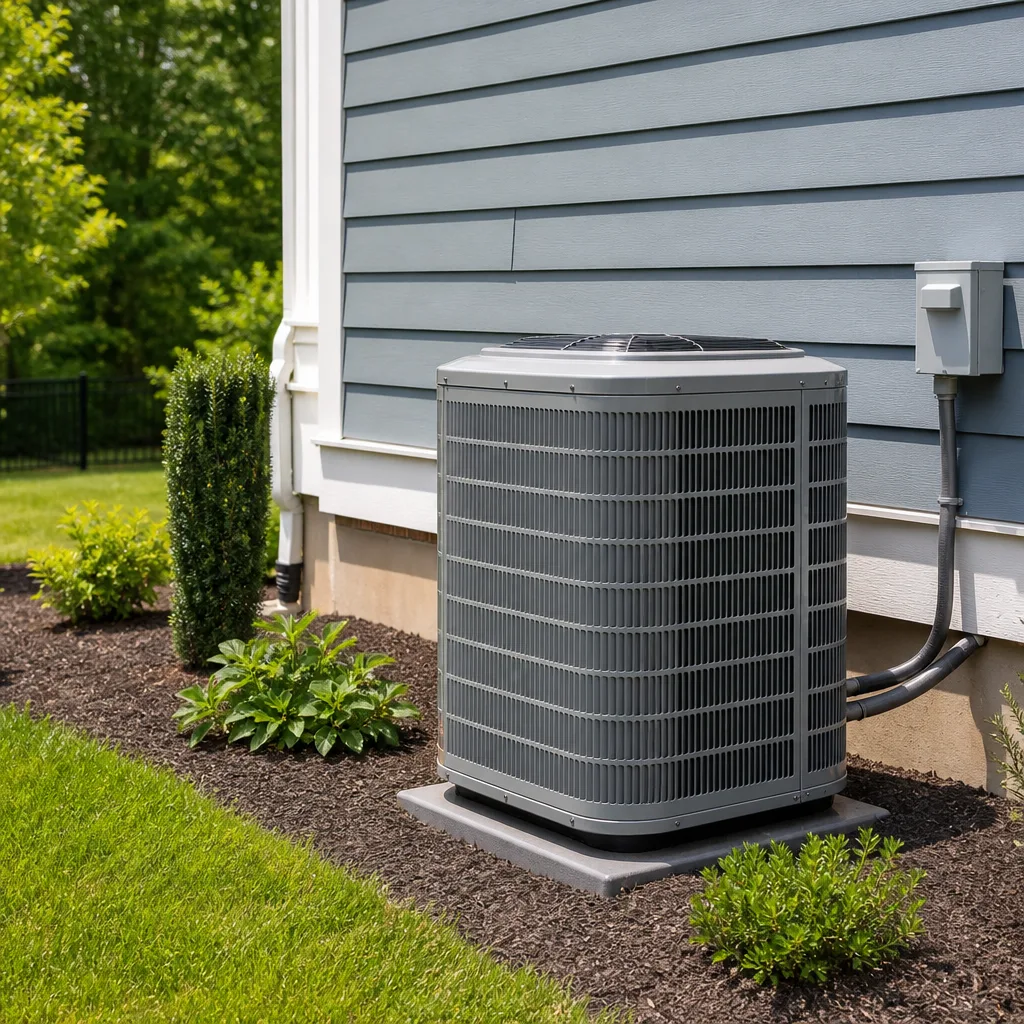 Carrier
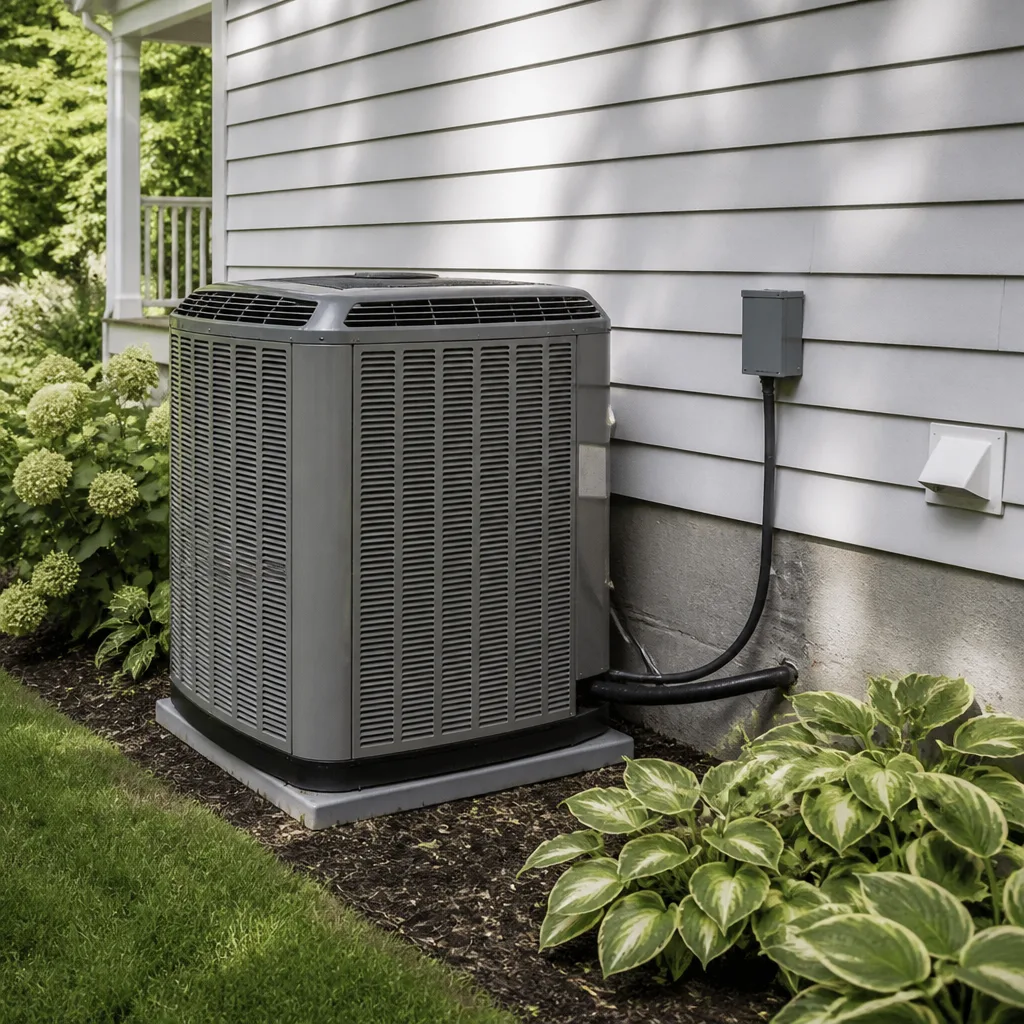 Trane
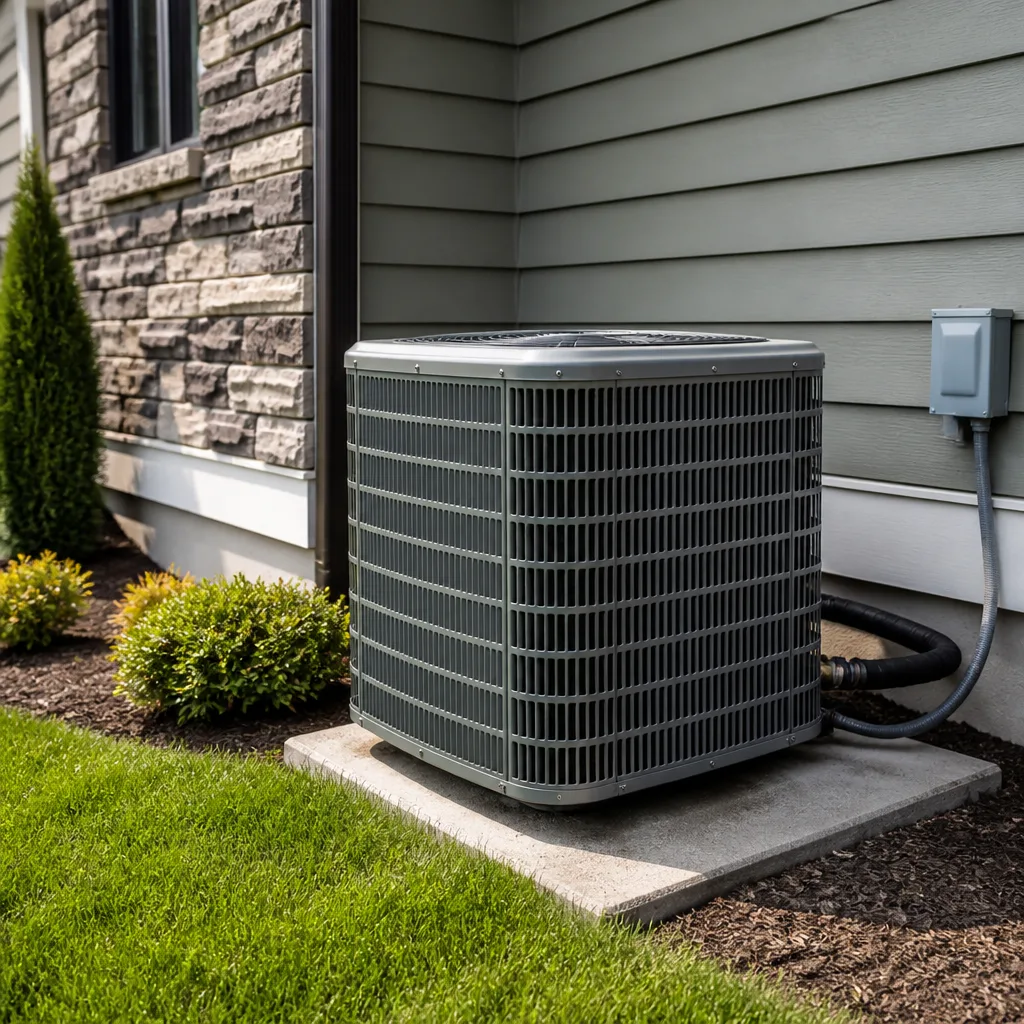 Goodman
Seasonal tune-up and full diagnostic on your Carrier, Trane, or Goodman system - readings shown to you before any repair is proposed
Diagnosis first, numbers second - you approve the repair price before a single part goes in.
Get your free estimateFurnace Replacement Maintenance Checklist for Allen Homeowners
A furnace that runs only 90 days a year doesn’t wear out. It corrodes, seizes, and fails on the first cold call of the season, usually a weeknight in November when every HVAC crew in Collin County is already dispatched. Most furnace advice assumes a system that grinds through a long winter. Yours doesn’t. In Allen, a furnace sits idle for roughly seven months, then fires under full demand the week the first real cold front pushes through. The failure that follows is rarely gradual wear. It’s dormancy damage that shows up all at once. This guide walks through what actually breaks on a low-use furnace, how to tell a true replacement candidate from a repair case, what a pre-season startup inspection should catch, why your old BTU rating may be the wrong number to copy, and what Allen’s permit process really costs you if an inspection fails.
Quick Answer
For most Allen homes, a furnace that’s 15 to 20 years old, has a cracked heat exchanger, or has logged two or more repairs in three years is a replacement candidate rather than a repair case. Anything younger with a clean inspection and a functioning inducer motor is usually a maintenance job. The single most valuable step is a pre-season startup inspection in early fall, before the first cold front, because dormancy failures don’t announce themselves during the idle months. A replacement in the Allen market typically runs from about $3,200 for a straightforward single-stage swap to $8,500 or more for a high-efficiency two-stage or variable-speed system with duct modifications, and the written estimate sets the final number.
Styles & brands we work with
- AC repair
- Furnace & heating
- Heat pumps
- Ductless mini splits
- Carrier
- Trane
- Goodman
Table of Contents
- Why Dormant Furnaces Fail Differently in Allen
- The Three Dormancy Failure Modes That Matter Most
- Repair or Replace? The Thresholds We Use
- The Pre-Season Startup Inspection Protocol
- Why Copying Your Old BTU Rating Is Often Wrong
- Allen Permits and What a Failed Inspection Costs
- Matching the Replacement to What’s Already There
- What Furnace Replacement Costs in Allen
Why Dormant Furnaces Fail Differently in Allen
North Texas heating seasons are short and sharp. A furnace in Allen might run 300 to 400 hours across a winter, most of that concentrated into a handful of cold snaps. Compare that to a furnace in a colder climate that runs thousands of hours across a long season. You’d think the Allen furnace would last longer, and in a pure wear sense it does. The problem is what happens between those runs.
Mechanical equipment does better in motion than in stillness. A blower that turns every day keeps its bearings oiled and its windings dry. A gas valve that cycles regularly keeps its internal seals supple. A heat exchanger that heats and cools in a steady rhythm manages its own thermal expansion in small, predictable increments. Park all of that for seven months in a hot attic, and the idle time does its own kind of damage.
Allen’s summers make it worse. Attic temperatures in this part of Collin County climb well past 130 degrees on a July afternoon, and that’s where a lot of furnaces sit. Heat, dust, and humidity cycle through a machine that isn’t running, so nothing pushes the air through and nothing dries it out. Wiring insulation stiffens. Lubricants separate. Rubber components take a set. By the time the thermostat calls for heat in November, the furnace is being asked to start cold after months of sitting in a hot box.
That’s why we treat the first cold snap as a stress test, not a routine start. When we talk with Allen homeowners about furnace repair, the pattern is consistent: the failure that shows up on the first genuinely cold night is usually something that was quietly degrading all summer, not something that wore out during last winter. The repairs that get missed are the ones the furnace can’t tell you about while it’s off.
The Three Dormancy Failure Modes That Matter Most
Three components account for the majority of first-cold-snap failures we see on low-use Allen furnaces. Each one fails for a different reason, and each one has a different implication for repair versus replacement.
1. Inducer Motor Seizure
The inducer motor pulls combustion gases through the heat exchanger and out the flue. It’s a small motor with sealed bearings, and when it sits idle for months in a hot attic, those bearings can stiffen or the shaft can rust in place. The furnace won’t fire if the inducer doesn’t spin, because the pressure switch won’t prove draft. You’ll hear the thermostat click, you’ll hear nothing, and the burners won’t light.
An inducer motor is usually a repairable component. The reason it matters is timing. A seized inducer in November means no heat until a part arrives, and depending on the brand the part may not be on a shelf nearby. This is one of the strongest arguments for checking the inducer during a fall startup inspection, when a technician can confirm it spins freely and the bearings sound clean.
2. Heat Exchanger Cracking from Thermal Cycling
A heat exchanger doesn’t crack because it’s old. It cracks because it moves. Metal expands when it heats and contracts when it cools, and every one of those cycles is a small stress event on the welds and seams. A furnace that runs continuously through a long winter actually experiences fewer sharp cycles than a furnace that fires from dead cold, blasts for twenty minutes, and shuts off. The Allen pattern is a lot of hard starts and hard stops.
A cracked heat exchanger is the one finding that changes the conversation from repair to replacement. A crack can allow combustion gases into the supply air, which is a genuine safety issue, not a performance issue. If a technician finds a crack, the furnace should not be run until it’s replaced. This is also the reason we never recommend an inspection that skips the heat exchanger, even if everything else checks out. Any furnace with a heat exchanger problem is a replacement, full stop. It’s not a component worth repairing.
3. Gas Valve Stiction
Gas valves have internal seals and a solenoid that opens and closes on every call for heat. Sitting idle for months lets those seals dry and lets the internal mechanism stick, and the valve may fail to open cleanly on the first call of the season. Sometimes it opens on the second or third try and works fine the rest of the winter. Sometimes it doesn’t open at all. Stiction is the term for that hesitation.
A sticky gas valve is a safety concern as much as a comfort one. A valve that doesn’t seat cleanly can allow a small amount of gas through when it shouldn’t. Any work on a gas valve or the gas piping feeding the furnace is work for a trained technician. We don’t recommend homeowners attempt it, and we don’t walk through it here beyond describing what the valve does. The practical answer is that a startup inspection includes a check of the valve’s operation, and a sticky valve should be replaced before it becomes a call at 10pm on the coldest night of the year.
Repair or Replace? The Thresholds We Use
The repair-versus-replace question is where most homeowners get talked into the wrong decision in one direction or the other. A contractor who only installs will push replacement. A contractor who only repairs will keep patching a machine that’s finished. Here’s the decision framework we actually use when we look at an Allen furnace.
Age Is the First Filter, Not the Only One
- Under 10 years old: Almost always a repair case unless the heat exchanger is cracked or the repair estimate exceeds roughly a third of the replacement cost. Modern furnaces should reach this age with routine maintenance.
- 10 to 15 years old: The middle zone. A single clean repair with a good inspection is a reasonable call. Two repairs in a two-year window starts tilting toward replacement, especially if the repairs are in different systems.
- 15 to 20 years old: Replacement becomes the default recommendation, particularly for a furnace with an 80% AFUE rating. The efficiency gap between that unit and a modern system is large enough that the operating cost difference starts to matter.
- Over 20 years old: Replacement. A furnace of that age has already outlived its expected service life, and parts availability gets unpredictable across the major brands.
The Repair Cost Ratio
A simple rule we use: if a single repair costs more than about one third of what a replacement would run, the money is better spent on a new furnace. That ratio shifts with age. On an eight-year-old furnace we’d stretch further. On a seventeen-year-old furnace, even a modest repair is money going into a machine that’s near the end of its life.
Efficiency as a Tiebreaker
Furnaces are rated by AFUE, which measures how much of the fuel’s energy becomes heat. An older 80% furnace loses a fifth of its fuel up the flue. A modern high-efficiency unit recovers much of that. If you’re facing a $900 repair on a 17-year-old 80% furnace, the willingness to spend that money depends partly on how long you plan to stay in the home and partly on what a new system would save you in gas each winter. We’ll walk through both numbers with you rather than push one answer.
The Pre-Season Startup Inspection Protocol
The single highest-value thing an Allen homeowner can do for their furnace is schedule a startup inspection in late September or early October, before the first cold front. The point is to find dormancy damage while the weather is still mild and a part order isn’t an emergency. Here’s the sequence a thorough inspection follows.
- Visual inspection of the heat exchanger. A technician uses a camera or direct visual access to check the primary and secondary heat exchanger surfaces for cracks, discoloration, or evidence of flame rollout. This is the most important step and the one that should never be skipped.
- Inducer motor spin test. The technician confirms the inducer spins freely by hand and powers on cleanly, checking for bearing noise and confirming the pressure switch proves draft.
- Gas valve operation check. The valve is cycled and observed for smooth opening, clean seating, and no delayed ignition. A gas smell or hesitation is a stop-and-replace.
- Igniter and flame sensor check. Both are wear items. The technician confirms the igniter draws the correct current and the flame sensor reads a clean signal. A weak flame sensor is a common cause of short cycling.
- Blower motor and capacitor test. The blower is the component most likely to have stiffened over a summer. The technician checks amp draw, bearing play, and the run capacitor’s capacitance against its rating.
- Condensate line and drain check. On a high-efficiency condensing furnace, the condensate trap and drain line can clog or grow biological growth over the idle months. A blocked drain shuts the furnace down on a safety switch.
- Vent and flue inspection. The technician confirms the vent pipe is clear, correctly pitched, and sealed. A bird’s nest or insect blockage in a flue is not unusual after a summer of disuse.
- Filter change and airflow check. A fresh filter and a static pressure reading tell you whether the duct system is restricting the blower. Restricted airflow accelerates every other failure mode.
- Thermostat and safety switch verification. The technician runs the furnace through a full heating cycle and confirms the high-limit switch, rollout switch, and pressure switch all behave correctly.
The full inspection takes an hour or so. The reason it pays off is that any of those nine items can fail silently over a summer, and all of them are far cheaper to address in October than in a November cold snap when crews are booked out. If you’re not sure whether your current system is worth inspecting or replacing, a conversation about AC installation and its heating counterpart can help frame the decision by what the whole system needs together.
Why Copying Your Old BTU Rating Is Often Wrong
A common shortcut in furnace replacement is to look at the data plate on the old unit and order the same BTU input. That’s a mistake more often than it’s right. The number on the plate reflects the home as it was when the original furnace went in, and homes in Allen change.
What Changes Between Installs
- Added attic insulation. Many Allen homes built before the mid-2000s have had insulation upgraded since, sometimes more than once. A tighter thermal envelope needs less heat output.
- Window replacement. A home with original single-pane windows and one with modern double-pane low-E windows have very different heat loss profiles. If the windows were replaced, the original furnace sizing is stale.
- Air sealing and duct work. Sealing attic bypasses and reworking leaky ducts changes how much conditioned air actually reaches the rooms. A furnace sized for leaky ducts may now be oversized.
- Room additions or conversions. A converted garage or an added sunroom changes the load, and the old furnace never knew about it.
What an Oversized Furnace Does
An oversized furnace heats the house quickly, satisfies the thermostat, and shuts off before the heat has spread evenly. The result is short cycling, uneven room temperatures, and more thermal cycling stress on the heat exchanger than a correctly sized unit would see. In a climate where the furnace runs a short season anyway, oversizing wastes the one thing you want out of it: a steady, controlled run.
Doing this right means a load calculation, not a guess. A proper Manual J calculation accounts for square footage, window area and orientation, insulation values, air infiltration, and the local design temperature for the Allen area. We run the calculation on every replacement rather than matching the old nameplate. It’s the difference between a system that fits the house as it stands today and one that fits the house as it stood when a different family lived there.
Allen Permits and What a Failed Inspection Costs
A furnace replacement in Allen requires a permit and an inspection. This is not a step to skip or a formality. Most cities require a permit for a gas appliance replacement because the inspection confirms gas connections, venting, clearances, and combustion air are correct. The inspector is the person who signs off that the installation is safe, not just that it works.
What the Inspection Covers
- Gas line connection and leak testing
- Vent and flue termination, pitch, and clearances
- Combustion air supply and clearance to combustibles
- Electrical connection and disconnect
- Condensate drain routing on high-efficiency units
- Equipment label, model, and rated input match to the permit
What a Failed Inspection Actually Costs You
A failed inspection is not free. The inspector identifies the deficiency, and the work has to be corrected before a re-inspection. In the meantime, the system often cannot be put into service, which means no heat in the house. The costs stack up in three places:
- Re-inspection fees. Most jurisdictions charge a re-inspection fee when a job fails the first time. The amount varies, but it’s money that wouldn’t have been spent on a clean install.
- Corrective labor and parts. A vent pitched wrong, a combustion air opening undersized, or a gas connection that leaks are all corrections that cost time and material to fix.
- Time without heat. If the inspection fails during a cold snap, the homeowner is waiting on a re-inspection slot while the house is without a working furnace. This is the cost that doesn’t show up on an invoice but matters most.
The reason this belongs in a maintenance checklist rather than a sales pitch is that permit compliance is part of what “done right” means on a replacement. A job that avoids the permit because it’s “just a swap” is a job you may end up paying twice for. We pull the permit and schedule the inspection as part of the replacement, every time. When it comes to something as consequential as a gas appliance installation, the Highpoint standard means the paperwork and the inspection line up with the work.
Matching the Replacement to What’s Already There
Furnace replacement isn’t brand-independent the way a homeowner might assume. The existing duct system, the venting configuration, and the electrical service all interact with what the new unit needs. A high-efficiency condensing furnace needs a different venting setup than an 80% unit, and a variable-speed blower has different electrical requirements than a single-stage. Getting the match right at the specification stage is what prevents a costly rework during installation.
This is where multi-brand familiarity matters. We work on Carrier, Trane, Lennox, and Goodman equipment, among others, and knowing how a specific brand’s control board communicates with its thermostat or how its inducer mounts to its heat exchanger changes what we recommend. If your current system is a Trane, we already know what a Trane replacement looks like in that cabinet footprint and what the venting tie-in involves. If it’s a Goodman, we know the parts availability picture. That familiarity is the difference between a technician who reads the manual on arrival and one who knows the equipment before the call.
When It Makes Sense to Stay in Brand
Staying with the same brand is often the path of least friction, but it isn’t a rule. The two situations where it clearly pays off:
- The existing venting and ductwork are set up for that brand’s configuration. Changing brands sometimes means changing vent terminations or connector sizes.
- A warranty replacement is in play. A manufacturer’s warranty that covers a failed heat exchanger usually specifies a compatible replacement, and staying in brand keeps that coverage intact.
Outside those cases, the right system is the one sized and specified for your house, not the one with the same logo on the door. We’ll walk through both paths with you.
What Furnace Replacement Costs in Allen
Prices in the Allen market vary by system type, efficiency, and what the existing install needs to accommodate. The ranges below are typical and estimated, not exact, and the written estimate after an on-site assessment sets the final price. Replacement work is scheduled rather than same-day because the system is load-calculated, ordered, and installed to permit.
| Scope | Typical Estimated Range |
|---|---|
| Single-stage 80% AFUE furnace, direct replacement in an existing footprint | $3,200 – $4,800 |
| Two-stage 80% AFUE furnace | $4,200 – $6,200 |
| High-efficiency condensing furnace (90%+ AFUE) with new venting | $5,200 – $8,500 |
| Variable-speed high-efficiency system | $6,500 – $9,500 |
| Duct modifications to accommodate the new unit | $400 – $1,800 |
| Permit and inspection fees | $150 – $350 |
Two things drive the difference between the low and high end of any of those rows. The first is whether the existing venting and ductwork can be reused or has to be modified. A high-efficiency replacement almost always requires new venting because the flue gases are cooler and condensing, which is a different venting category than an 80% unit uses. The second is the electrical service to the furnace location, since variable-speed equipment may need a circuit that matches its requirements.
We don’t quote over the phone for replacement, because a phone estimate either lands too high or too low and neither helps you. What we do is come out, calculate the load, inspect the existing system, and give you a written fixed price for the install date. The estimate is free. If you want a rough number to plan around before calling, the table above is a fair starting point for the Allen area.
Common Mistakes to Avoid
- Waiting for the first cold snap to test the furnace. By the time you turn it on in November, an inducer motor that seized in August is already a no-heat call. Run the system in late September, when a problem is still a repair appointment rather than an emergency.
- Replacing with the same BTU rating on the label. The old nameplate reflects the house as it was, not as it is now. Re-insulation, new windows, and air sealing since the original install all change the right number.
- Skipping the heat exchanger inspection to save time. It’s the one finding that turns a repair into a replacement, and it’s a safety issue that a filter change and a flame check won’t catch. Never let it get skipped.
- Skipping the permit because it’s “just a swap.” The inspection confirms gas connections and venting are correct. A job that avoids the permit is a job you may pay for twice, and a failed inspection costs you re-inspection fees, corrective labor, and time without heat.
- Choosing a contractor by bid alone. The lowest bid usually reflects the shortest inspection and the least attention to load calculation and permit compliance. A furnace that doesn’t fit the house is a comfort problem you live with for years.
- Ignoring a gas valve that hesitates. A valve that sticks on the first try of the season is a safety concern, not a quirk. Have it checked and replaced if needed rather than waiting for it to fail.
- Confusing dormancy with wear. A low-use furnace in Allen can look fine on paper and still fail on the first cold night because the damage happened while it was off. Age alone doesn’t tell the story; the inspection does.
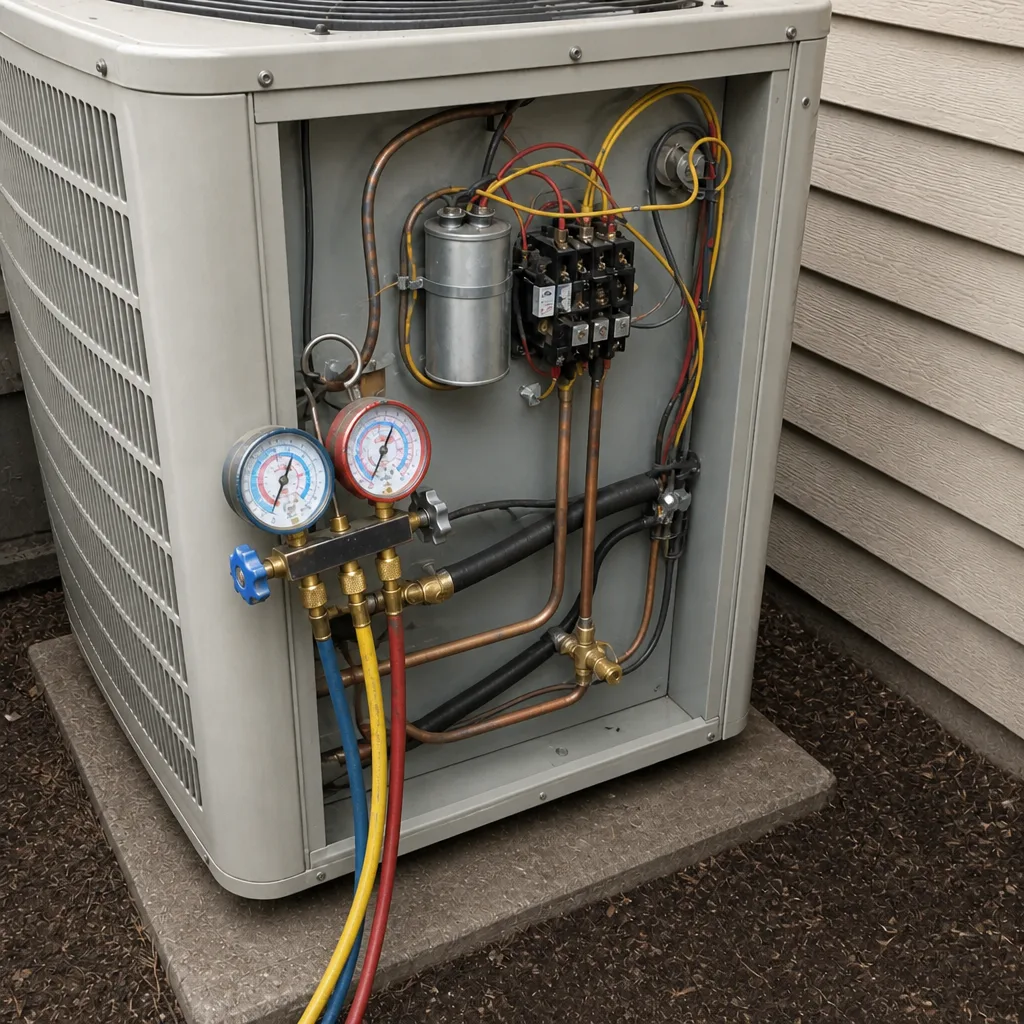
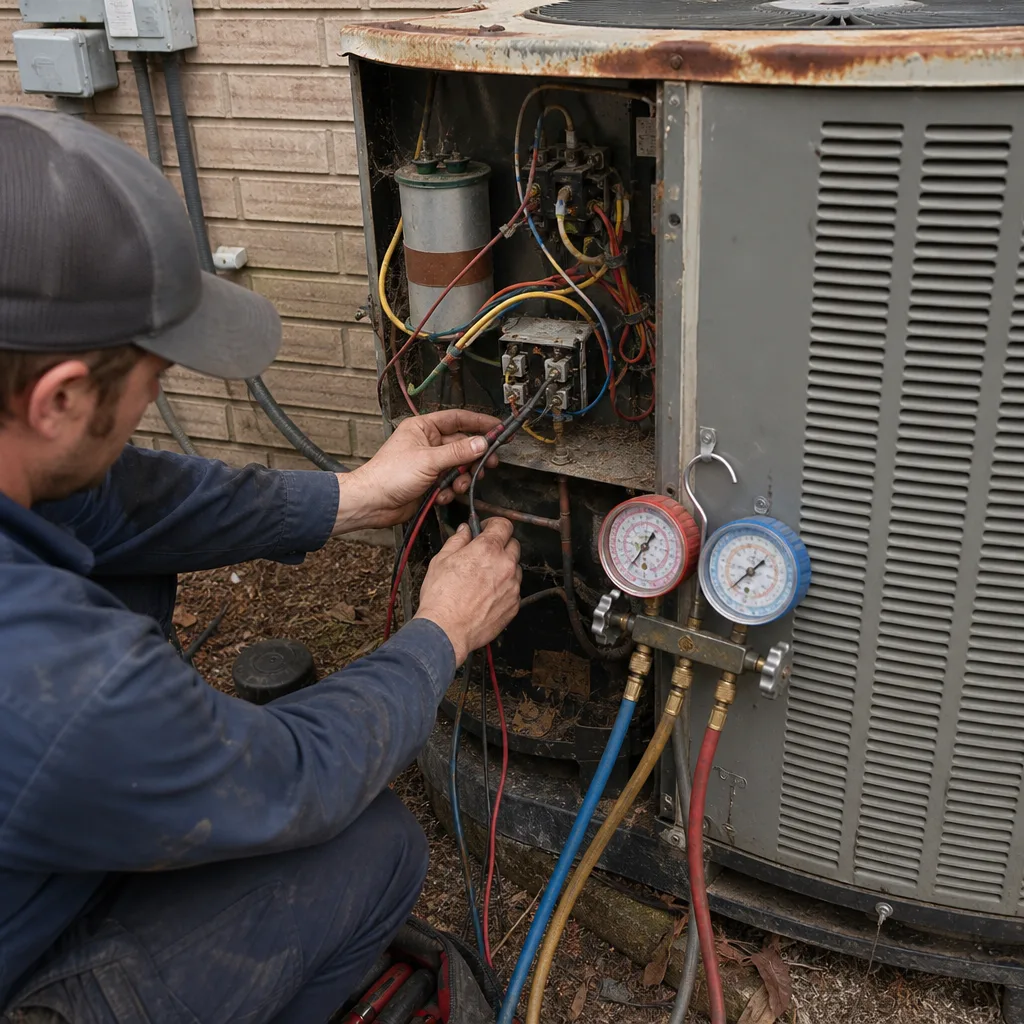
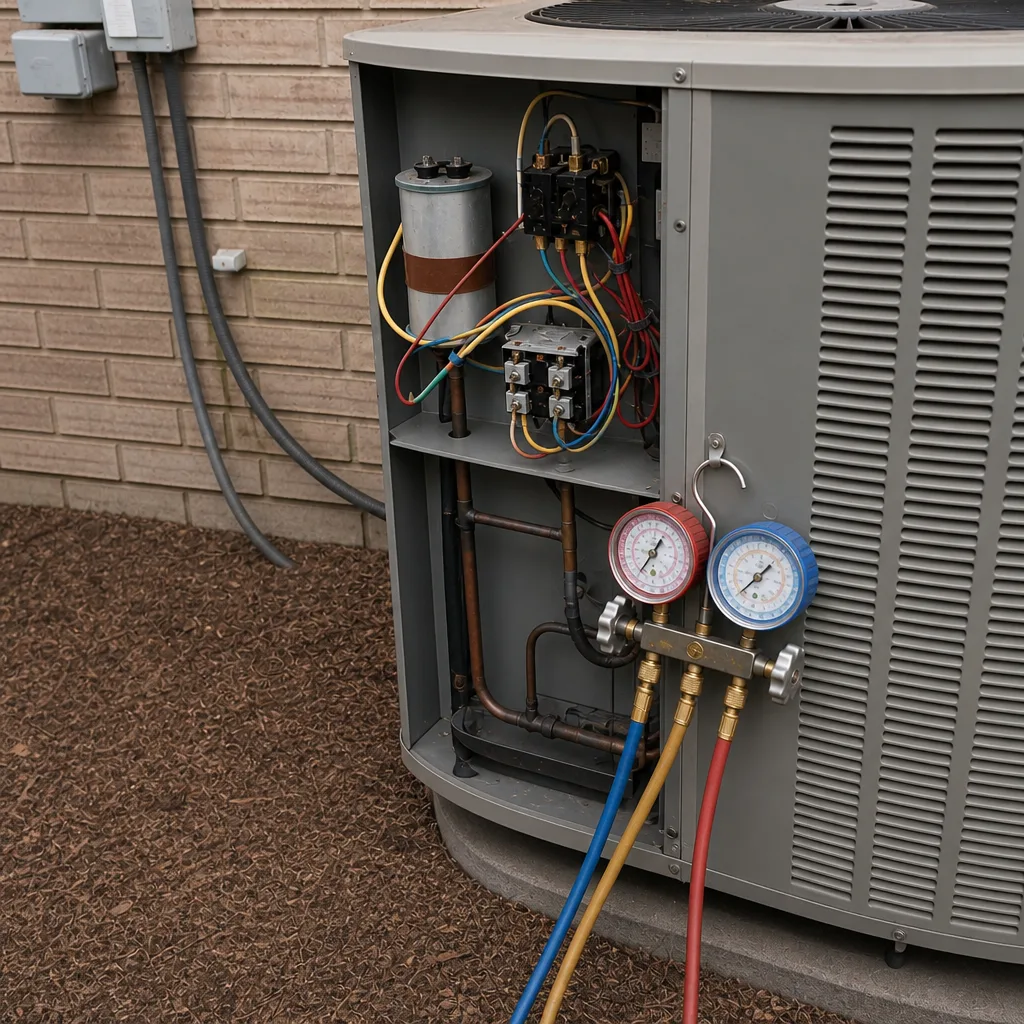
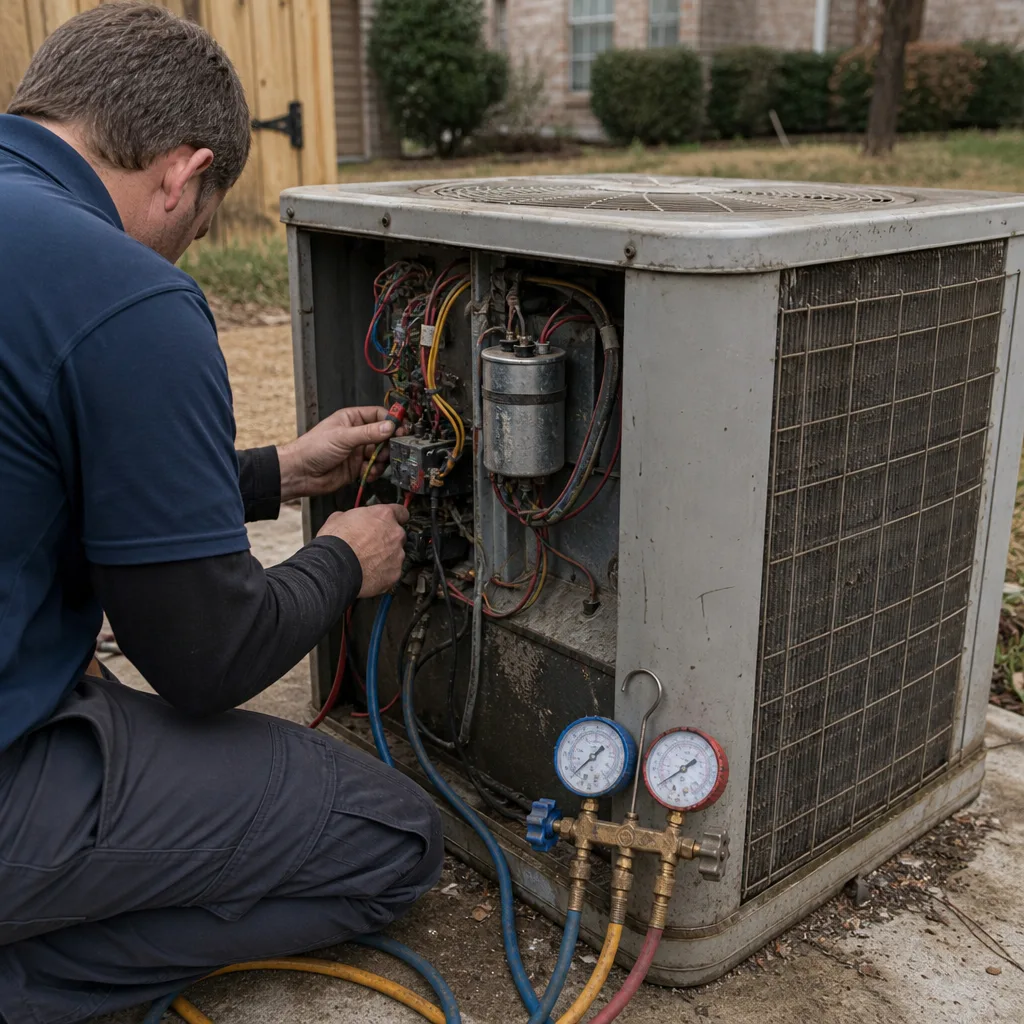
See the difference
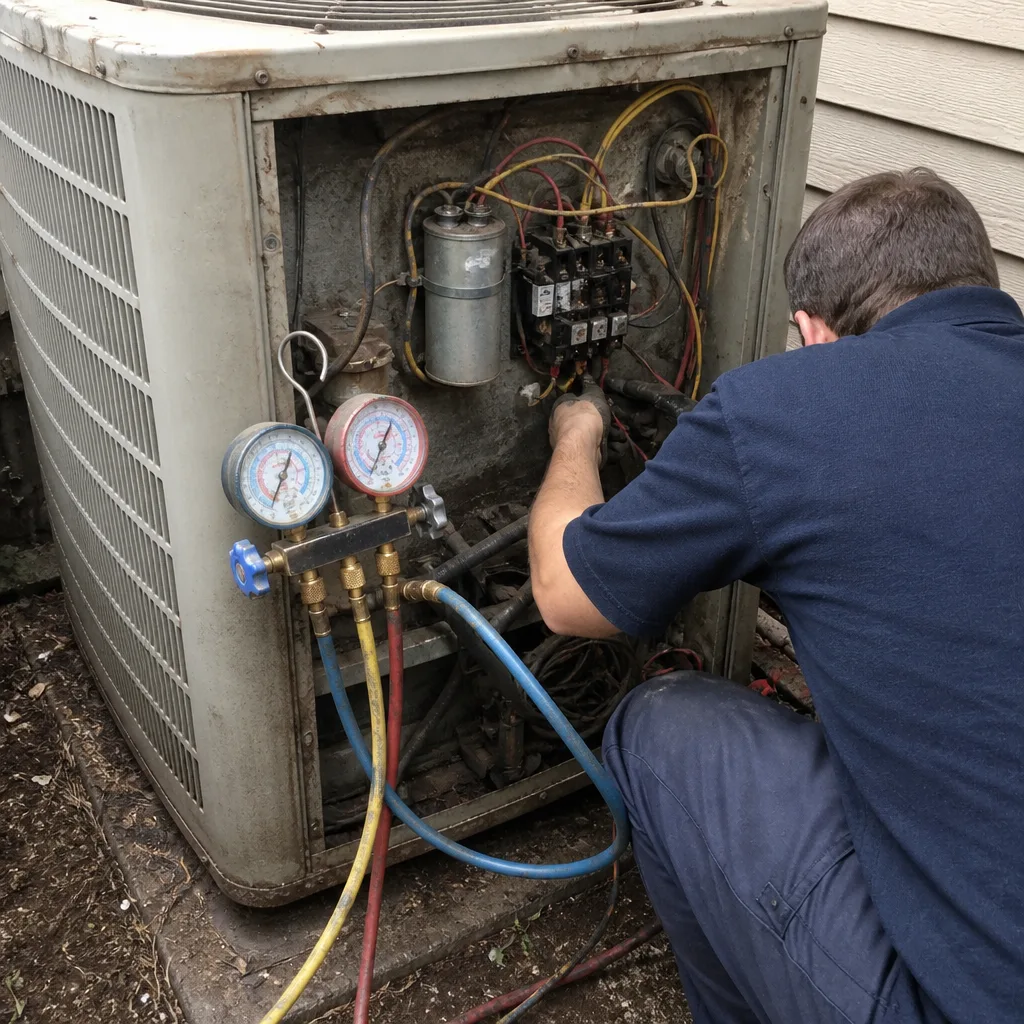 Before
 After
 Before
 After
 Before
 After
When to Call a Professional
Some furnace work belongs to a trained technician, and the boundary is clear. Gas valve work, heat exchanger inspection and replacement, venting changes, electrical connections, and anything involving the combustion path all require a licensed professional. A cracked heat exchanger is a safety issue that should stop the system from running. A gas smell is a stop-everything call. A furnace that won’t fire, short cycles, or produces a yellow rather than blue flame needs a technician who can diagnose it rather than a homeowner guessing at parts.
For Allen homeowners, Highpoint AC Repair handles furnace repair, furnace replacement, and the full scope of heating and cooling work with one call. We answer 24/7, and fast dispatch runs from 7am to 7pm, Sunday through Friday. If a furnace fails on a Saturday, the line is still answered and the call gets booked for the next opening. The estimate is free and the price is set per job by the written estimate. Call (855) 752-3431 to set it up.
Frequently Asked Questions
Once a year, in late September or early October, before the first cold front. In Allen’s climate the furnace sits idle for most of the year, so the pre-season inspection is the step that catches dormancy damage while the weather is mild. A furnace that runs through a full winter without issue still needs the inspection the following fall, because the idle months do their damage in between. Call (855) 752-3431 to schedule one before the season starts.
An inducer motor that seized or a gas valve that stuck over the summer. Both components sit idle for months and both fail at startup rather than during a run. Because the failure happens on the first cold call, it usually lands during the busiest week of the year for HVAC crews, which is exactly when you want to have already inspected the system. A fall startup check catches both issues before they become an emergency.
Yes. A cracked heat exchanger allows combustion gases into the supply air and cannot be repaired in a way that restores the furnace to safe operation. The unit should be replaced, not patched, and it should not be run in the meantime. This is the one finding that overrides the repair-versus-replace calculation entirely. Call us for an assessment and a written estimate: (855) 752-3431.
Yes, most cities including Allen require a permit for a gas furnace replacement, and the installation is inspected afterward. The inspection confirms gas connections, venting, clearances, and combustion air, and it’s the step that signs off that the install is safe rather than just working. A contractor who skips the permit is skipping the inspection. We pull the permit as part of every replacement.
Typical estimated ranges run from about $3,200 for a direct single-stage 80% replacement to $8,500 or more for a high-efficiency condensing system with venting, with duct modifications and permit fees adding to the total. The written estimate after an on-site load calculation sets the final price. Call (855) 752-3431 for a free estimate.
Because the house has changed since the original install. Added insulation, new windows, air sealing, or a room addition all change how much heat the house actually needs, and the old BTU rating reflects none of that. A load calculation based on the home as it stands today is what determines the right size, and it’s what we run before specifying a replacement. Call (855) 752-3431 to set up an assessment.
The Bottom Line
In Allen, the furnace problem is rarely wear. It’s dormancy: months of idle time in a hot attic followed by a hard start on the first cold night. The checklist that matters is a fall startup inspection before the season, a heat exchanger check that never gets skipped, a load calculation rather than a copied BTU rating, and a permit and inspection on every replacement. If your furnace is 15 to 20 years old, has a cracked heat exchanger, or has logged two repairs in three years, it’s a replacement candidate. If it’s younger and clean, keep it maintained and inspected. Either way, the time to find out is before the cold front, not after. For furnace repair, furnace replacement, and the whole system under Highpoint AC Repair, call (855) 752-3431 for a free estimate. We answer 24/7. Fast dispatch from 7am to 7pm, Sunday through Friday.
If you’re also planning for the cooling season, our Allen service page covers the full scope of what we handle across heating and cooling.
Written by the team at Highpoint AC Repair.