
Last updated November 16, 2026
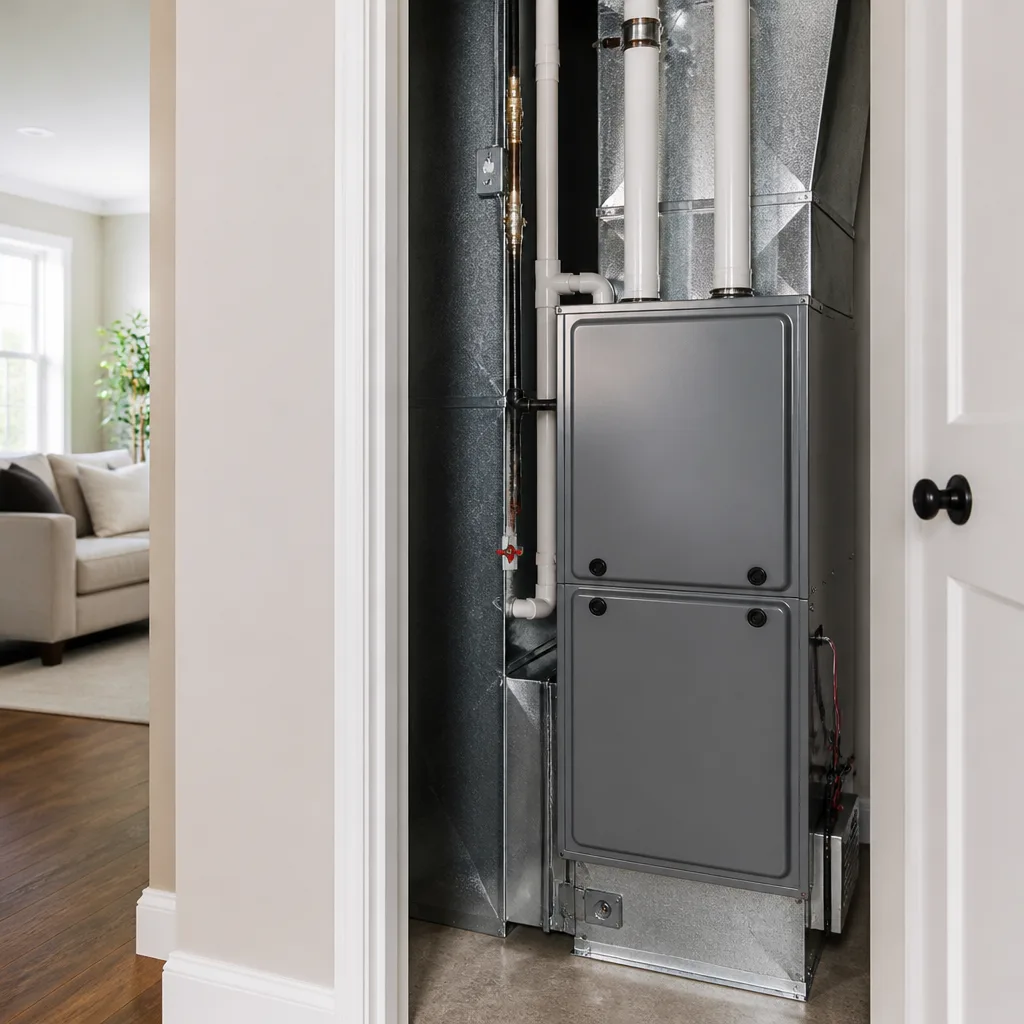 Furnace & heating
 AC repair
 Heat pumps
 Ductless mini splits
 Carrier
 Trane
 Goodman
Seasonal tune-up and full diagnostic on your Carrier, Trane, or Goodman system - readings shown to you before any repair is proposed
Diagnosis first, numbers second - you approve the repair price before a single part goes in.
Get your free estimateFurnace Replacement Troubleshooting in Allen: Common Problems and How to Fix Them
One of the most common calls we get after a furnace replacement is some version of “it’s doing the same thing the old one did.” That’s worth sitting with for a second. A cracked heat exchanger and a failing draft inducer can throw the same symptom on a thermostat display, but they need completely different fixes, and only one of them justifies a new furnace. The uncomfortable truth is that most furnace replacements that go wrong in Allen aren’t installation failures at all. They’re diagnosis failures – a unit got swapped out when the real problem sat upstream in the flue, the gas line, or the thermostat wiring. This guide walks you through how to validate a diagnosis before you authorize the work, what post-installation problems actually show up in Allen homes, and which red flags should make you ask for documented evidence.
Quick Answer
If a new furnace is acting up, the cause is usually one of four things: a fault code pointing to a venting problem the installer introduced, a gas pressure issue left misadjusted during commissioning, a system sized wrong for the home, or a component that was replaced when the actual failure was never the furnace to begin with. Read the fault code at the control board first, request the diagnostic readings from the original visit, and verify the commissioning steps were completed before you accept that the “new unit is bad.” Most problems we troubleshoot in Allen trace back to diagnosis and setup, not to the equipment itself.
Styles & brands we work with
- AC repair
- Furnace & heating
- Heat pumps
- Ductless mini splits
- Carrier
- Trane
- Goodman
Table of Contents
- Why Most Furnace Replacement Problems Are Diagnosis Problems
- How to Read Furnace Fault Codes by Brand
- Post-Installation Issues Common in Allen Homes
- Red Flags That the Wrong Component Was Replaced
- Commissioning Checklist to Verify Before the Technician Leaves
- When a “Failed” New Furnace Is Really a Venting or Gas Pressure Issue
- Common Mistakes to Avoid
- When to Call a Professional
Why Most Furnace Replacement Problems Are Diagnosis Problems
The core of the issue is that a furnace is the last place in a heating system where a problem shows up, not the first. Combustion needs three things working in sequence: a thermostat call, a properly sized gas supply, and a vent path that lets exhaust leave the home and combustion air come in. When any of those three is compromised, the furnace shuts down as a safety response, and the shutdown looks identical whether the furnace is healthy or failing. A tech who skips the upstream checks and jumps to the flame sensor or the control board can condemn a furnace that was doing its job all along.
This is where our multi-brand work matters. We service Carrier, Trane, Lennox, Goodman, Rheem, York, Daikin, Bryant, and American Standard, and across nine lines we’ve learned to read failure patterns rather than guess. A Goodman that short-cycles has a different likely cause set than a Trane that short-cycles, but the diagnosis method is the same: verify the gas supply, verify the venting, verify the air flow, then look at the component.
Three questions separate a real diagnosis from a guess:
- Did the technician measure and record gas manifold pressure, or just look at the flame?
- Did they run a combustion test or check vent termination, or assume the flue is fine because it’s “there”?
- Did they confirm the control board fault code against the brand’s diagnostic chart, or read a thermostat error?
If the answer to all three is no, you don’t have a diagnosis. You have a bid. Before you approve a furnace replacement in Allen, ask for the readings. Any technician working to the Highpoint standard can hand them over without hesitation.
How to Read Furnace Fault Codes by Brand
Every modern furnace flashes a fault code at the control board, and that code is the fastest way to understand what the unit thinks is wrong before anyone arrives. The codes aren’t identical across brands, but they fall into recognizable families. Learning to read the family tells you whether the furnace is reporting a venting problem, an ignition problem, or an airflow problem – and those lead to very different conversations.
| Fault family | What the board is reporting | Likely direction of the fix |
|---|---|---|
| Pressure switch / draft inducer faults | Exhaust flow is blocked, interrupted, or the inducer isn’t proving | Flue termination, condensate blockage, inducer motor, or a venting mistake made at installation |
| Ignition / flame sense faults | The burner lit and didn’t prove, or proved and dropped out | Gas pressure, dirty flame sensor, ground, or intermittent flame rollout |
| High-limit / airflow faults | The furnace is overheating and shutting down on safety | Filter, blower speed, undersized returns, or a system oversized for the home |
| Rollout faults | Flames escaped the heat exchanger area | Blocked flue, cracked heat exchanger, or backdraft – call a professional immediately |
On a Lennox you’ll typically see LED blink codes on the board; Carrier and Bryant boards often report through a diagnostic LED or, on newer models, a digital display; on a Trane you’ll watch the board’s own indicator and cross-check it to the unit labels; on a Goodman the LED sequence maps to the troubleshooting chart inside the blower door. All four brands (and the Rheem, York, Daikin, and American Standard units we also service) reward you for one simple habit: write down the exact blink sequence or display code before shutting the power off.
That record is evidence. It tells the next technician exactly what the furnace reported, not what someone remembered being “weird.” Safety note: reading a blinking LED with the blower door switch taped is one thing; opening the burner compartment to chase flame rollout is another. If the code family above is rollout, stop and call a trained professional – that condition means combustion products or flame are where they shouldn’t be.
Post-Installation Issues Common in Allen Homes
Once a new furnace is running, the problems that surface tend to cluster around the way Allen homes and Allen summers interact with a heating system. These aren’t installation catastrophes – they’re the fine-tuning issues that show up in the first heating season and get blamed on the equipment when they’re really setup.
Short cycling from oversizing
Collin County homes built in the 2000s and 2010s often have tighter, better-insulated envelopes than the furnace was sized for if someone matched tonnage to the previous unit rather than running a load calculation. An oversized furnace heats the space fast, satisfies the thermostat, and shuts down before it ever reaches steady-state efficiency. The homeowner hears a furnace that “runs for five minutes and quits,” and the symptom looks like a limit switch failure. The fix is verifying the load, not replacing a limit.
Condensate drainage failures in high-humidity months
High-efficiency furnaces produce condensate, and North Texas humidity swings from humid summer months to drier winter air. A drain line that ran fine in a dry test can back up or lose its trap when humidity climbs, and the pressure switch sees water where it expects air. When a new furnace starts short-cycling or shutting off on a pressure fault in spring or fall, the condensate trap and drain slope are the first things to check.
Filter sizing mismatches in retrofitted returns
Replacement jobs often involve adapting an existing return drop to a new furnace cabinet. If the return is choked or the filter rack is undersized, the furnace runs starved for air and trips the high-limit. This one is easy to catch because the filter itself is visibly bowed or the rack won’t accept a full-width filter.
Physical fit issues in tight closets
Allen homes with interior furnace closets sometimes have clearance that barely meets the install manual. A unit set too close to a combustible surface or starved of combustion air will run hotter than it should and code out on high-limit or rollout. If that’s the case, the fix is to correct the clearance, not to install a bigger vent.
Red Flags That the Wrong Component Was Replaced
A furnace replacement that doesn’t solve the problem costs the homeowner a unit and the contractor’s credibility, and it happens more than the industry admits. The pattern is consistent enough that you can learn to spot it before you write the check.
Watch for these signs that the diagnosis was thin:
- You were told the heat exchanger was cracked without a photo or video. A heat exchanger inspection means removing and lighting it properly. If the report was verbal only, ask for visual evidence before authorizing the replacement.
- The replacement bid arrived without diagnostic readings. No manifold pressure, no combustion numbers, no temperature rise on the original unit – that’s a bid, not a diagnosis.
- The old furnace’s fault code was never recorded. The board was telling the story the entire time. If nobody wrote it down, nobody read it.
- The venting was described as “fine” without checking the termination. A clogged or wrong-height flue termination can mimic a heat exchanger failure on the thermostat display.
- The gas pressure was never measured. Manifold pressure too low produces weak flame, delayed ignition, and a control board that reads as flaky. It’s a $0 part to adjust and a common miss.
- The thermostat wiring was never verified. A shorted or miswired C-wire can produce intermittent operation that a new furnace won’t fix, because the new furnace is reading the same faulty signal.
Here in Allen, the calls we take from homeowners who got caught on the wrong side of this usually start with “they said the board was bad, and then they said the whole unit was bad.” That sequence is worth questioning. A board replacement that doesn’t resolve the symptom usually means the symptom began at the board – meaning it came from the wiring, the thermostat, or the power supply, not the furnace’s heart.
For any furnace replacement decision, we hand over the readings – combustion analysis, temperature rise, gas pressure, and a photo of any cracked component. Highpoint AC Repair exists to be the second opinion that gets the original fix right.
Commissioning Checklist to Verify Before the Technician Leaves
Commissioning is the part of a furnace replacement that determines whether the next five years go smoothly. It’s also the part that gets rushed. When the technician is finishing up, ask him to walk you through each of these items and confirm it’s done. A crew working to a high standard will welcome the checklist.
- Manifold gas pressure measured and set to the manufacturer’s spec for your unit. Ask for the number.
- Temperature rise measured at the supply and return, within the nameplate range. Too high means restricted airflow; too low means undersized or over-venting.
- Combustion analysis run with a digital analyzer, with CO, O2, and draft readings recorded. This catches cracked heat exchangers, wrong orifices, and venting mistakes before they cost you a season.
- Static pressure measured on the supply and return side of the blower, confirming the duct system is within the furnace’s allowed range.
- Vent termination inspected from the outside, confirming the flue exits at the correct height and clearance and isn’t clogged or pulling in recirculated exhaust.
- Condensate trap and drain line verified for slope, trap depth, and free flow, including the overflow path.
- Filter installed with the correct MERV rating and the right size for the cabinet, not trimmed to fit.
- Thermostat and control configured for the correct number of stages, blower speed tap, and fan-on setting.
- Fault code cleared and the unit cycled through a full heat cycle at least once under load.
Ask the crew to leave a copy of the readings with the job. That record is what a future technician – us or anyone else – uses to know the furnace was set up right from day one. It’s also the single best defense against a problem being blamed on the equipment when it was a setup issue. If the next call for furnace repair arrives with those numbers in hand, we can skip straight to the real question.
When a “Failed” New Furnace Is Really a Venting or Gas Pressure Issue
Here’s the trap: a new furnace that won’t stay lit, short-cycles, or trips a pressure fault looks like a bad unit and is almost never a bad unit. On a properly installed furnace, the most likely culprits for these symptoms are venting and gas pressure introduced during installation – and the two look very similar from the thermostat.
Distinguishing them comes down to observation, not equipment:
- Venting problems show up at specific times and states. Cold-start shutdowns, pressure switch trips only on longer runs, or a flutter in the inducer’s sound point toward a flue restriction, wrong termination height, or recirculation. A single inducer that runs fine but can’t prove means a blocked or mis-stepped vent, not a motor.
- Gas pressure problems show up as flame quality. Weak, lazy, or lifting flames; delayed ignition; burner sound changes when other gas appliances in the house cycle. A manifold pressure out of spec can produce all of those and set off flame-sense or rollout faults downstream.
- Both problems produce the same blink code on many boards. That’s why written fault codes and actual readings, not a second opinion over the phone, are what settle it.
If a contractor diagnosed a failed furnace and your symptoms match the venting or gas pressure patterns above, get the original unit’s readings before authorizing a replacement. If a new furnace is already in and the venting or gas pressure wasn’t checked, that’s the first place to look. And if the diagnosis is confirmed as a genuine equipment failure, the free estimate we offer for a AC installation is the same standard we apply to furnace work – a written scope that names every step, so you know what’s being replaced and why.
Common Mistakes to Avoid
- Authorizing a replacement on a verbal diagnosis. Ask for photos of a cracked heat exchanger, gas pressure readings, and the recorded fault code before you sign off. If the readings don’t exist, the replacement isn’t justified yet.
- Assuming a heat exchanger inspection happened, when it didn’t. A true heat exchanger inspection means removing components and lighting the exchanger properly, not looking at the outside of the cabinet. In Allen’s established homes, a rushed inspection often becomes a rushed replacement.
- Skipping the outside vent check. A substantial share of “failed furnace” symptoms trace to a flue termination that was never inspected. Look from outside, not just under the hood.
- Reusing the old filter box without checking its size. A retrofitted return that doesn’t accept the correct filter will create a high-limit problem on day one.
- Approving a replacement without a load calculation. Matching tonnage to the old unit – rather than the home – produces short cycling and premature wear, which then gets misdiagnosed as a bad furnace.
- Not asking for the commissioning readings. If gas pressure and temperature rise weren’t measured, the unit isn’t set up, it’s just installed. That leaves a furnace in a state where its own safety controls will produce “failures” that don’t exist.
- Ignoring a rollout or gas smell at any point. Those aren’t troubleshooting symptoms, they’re stop-now conditions. Shut the gas off and call a professional. Combustion gas and flame rollout are hazards a homeowner shouldn’t work on.
When to Call a Professional
Some furnace problems are simple filter swaps; others are genuine safety events. Call a professional right away if you smell gas, see flame rollout at the burners, see scorching on the cabinet, or your CO alarm sounds. During a replacement decision, involve a technician when the fault code never clears, when the same symptom that justified the old replacement shows up on the new unit, when the furnace short-cycles on high-limit, or when the commissioning readings were never documented. The choice is between paying for guesswork twice and paying for a diagnosis once. Highpoint AC Repair offers free estimates in Allen – call (855) 752-3431. We answer 24/7. Fast dispatch from 7am to 7pm, Sunday through Friday. One call covers heating and cooling, and our technicians have up to 11 years of experience – a combination that means we’ve already seen a lot of what your fault code is describing.
See the difference
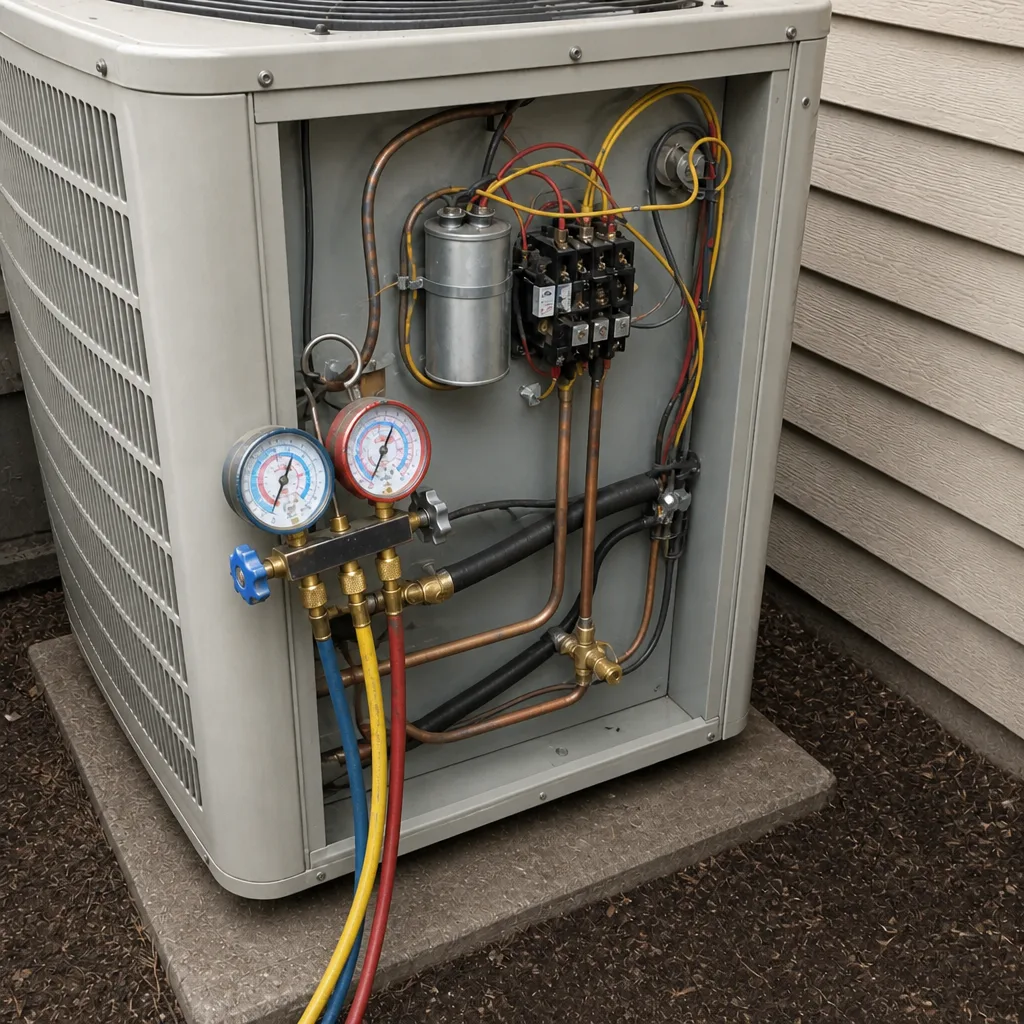
 Before
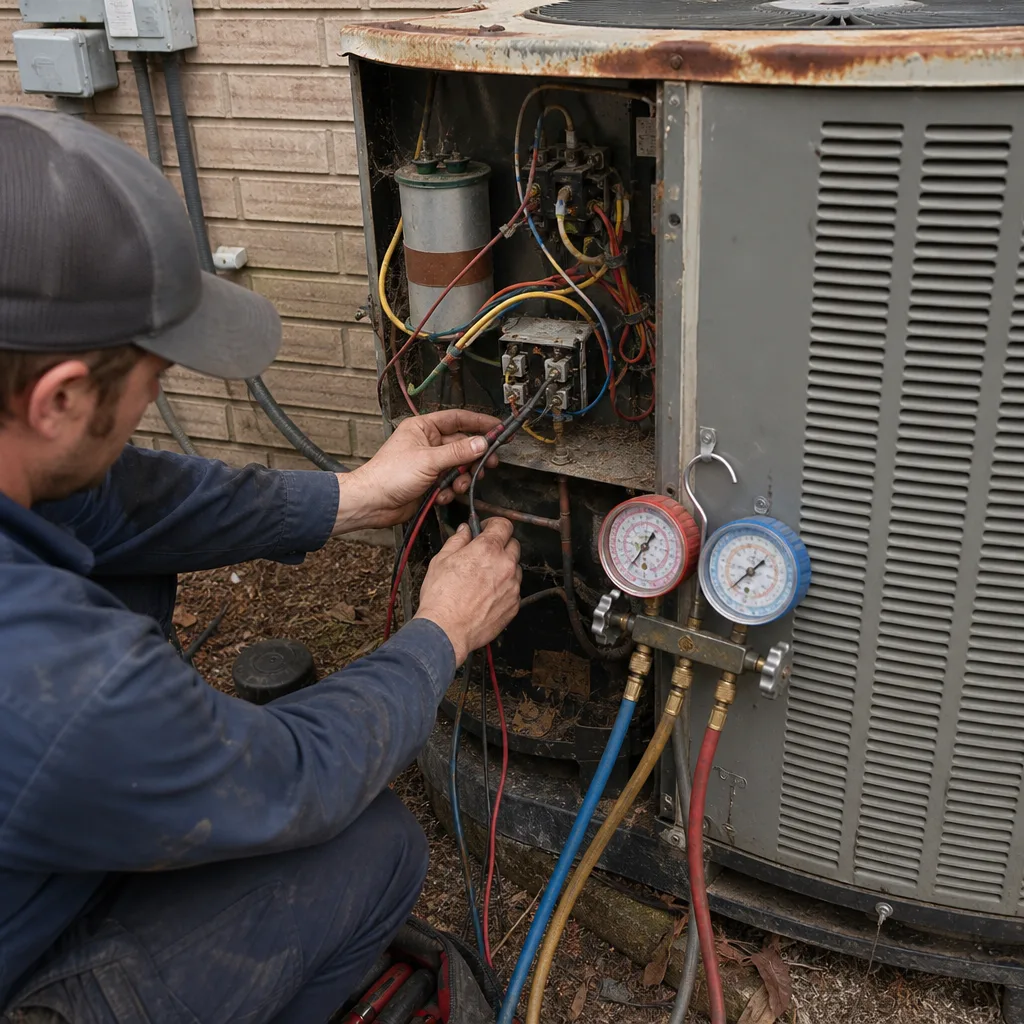
 After
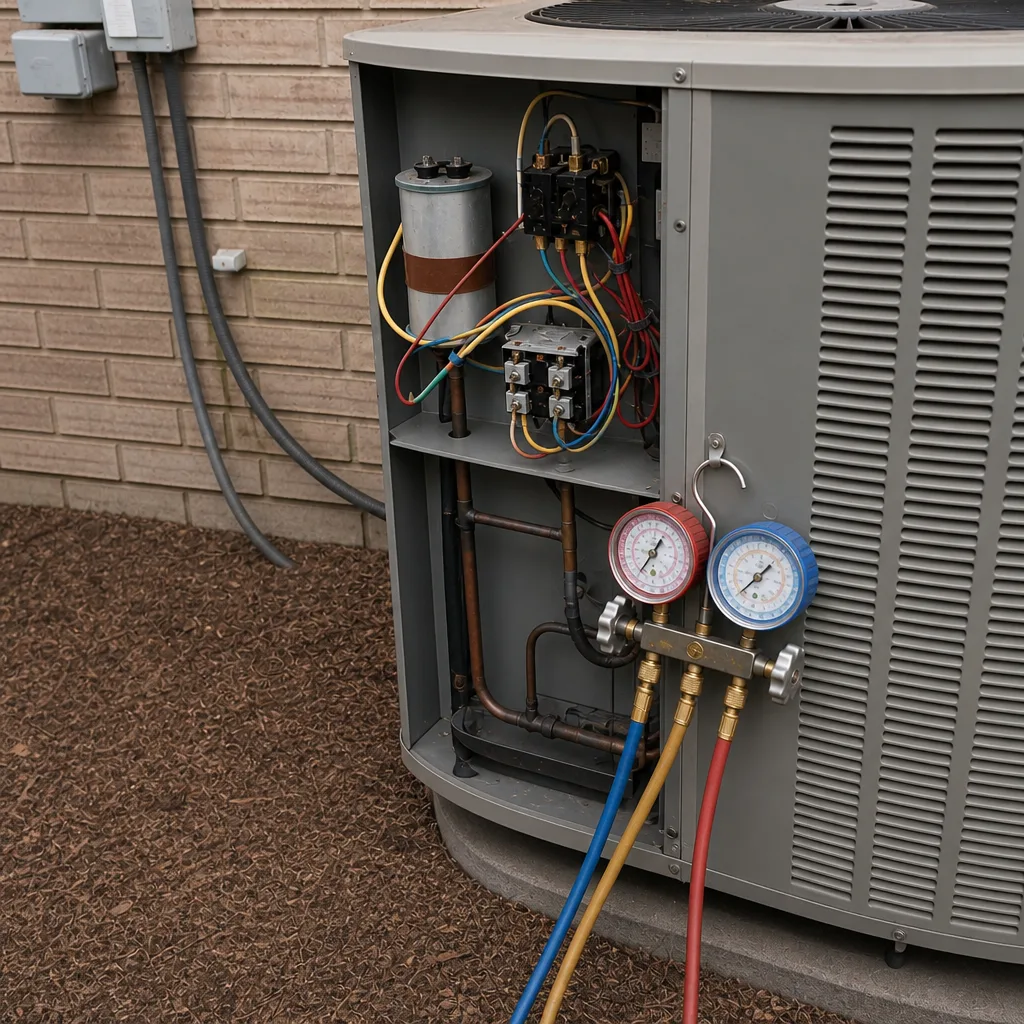
 Before
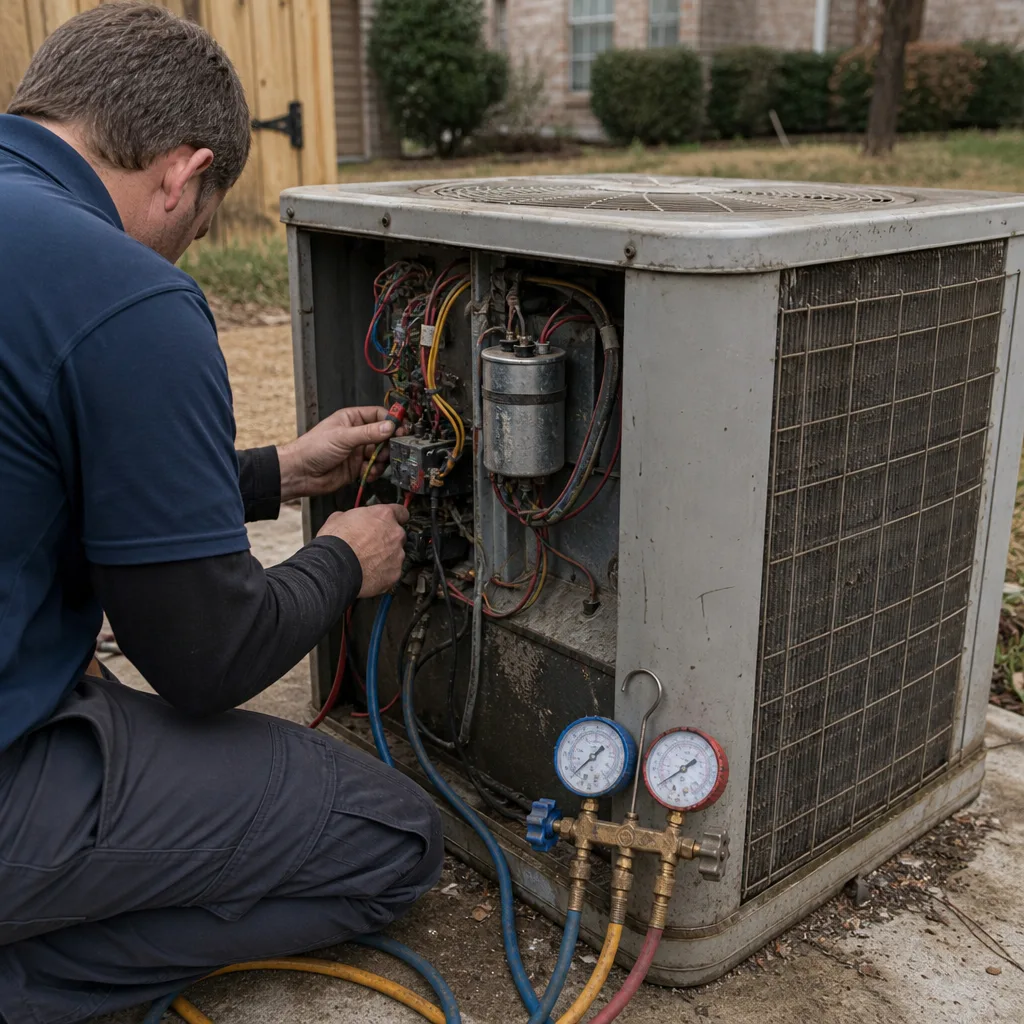
 After
 Before
 After
Frequently Asked Questions
You know the diagnosis was sound if the contractor recorded a fault code, measured gas manifold pressure, ran a combustion analysis, and produced visual evidence of any failed component. A replacement issued without those steps is guesswork, and it’s worth a second opinion. Call (855) 752-3431 for a free estimate – we’ll read the fault code and check upstream before recommending any replacement.
The fault code at the control board, then the venting and gas pressure. When a replacement doesn’t solve the original symptom, the problem almost always lives upstream of the furnace: a flue restriction, a gas pressure issue, or thermostat wiring. Bring the original code and the new code to a technician and they can usually tell the difference in one visit. Call (855) 752-3431 – estimates are free.
Short cycling after a replacement usually means the furnace is oversized for the home or underfed on return air. Collin County homes often have tighter envelopes than the previous furnace was sized for, and a matching-to-old-unit approach produces exactly this symptom. A load calculation and static pressure test both need to happen before the unit is judged. Call (855) 752-3431 for a technician who can verify it.
High-efficiency furnaces produce condensate, and a drain trap that loses its seal or a drain line that backs up will trip a pressure fault. In North Texas’s humid stretches, this shows up as intermittent shutdowns that have nothing to do with the furnace itself. Check the trap first, then have a technician confirm the drain slope. Call (855) 752-3431 for a free estimate on the fix.
Ask for a written scope that includes load calculation, commissioning readings, and a vent check from the outside. Local code and permit details vary, so confirm the current permit requirement with the City of Allen’s building department before work begins. A contractor working to the Highpoint standard will supply all of it without being asked. Call (855) 752-3431 for a free estimate in Allen.
No. Gas smell, flame rollout, scorching, or a sounding CO alarm are stop-now conditions, not troubleshooting symptoms. Shut off the gas supply at the valve, leave the area, and call a professional immediately. Do not attempt to relight or inspect the burner compartment yourself. Call (855) 752-3431. We answer 24/7.
The Bottom Line
Furnace replacement problems in Allen are far more often diagnosis and setup failures than equipment failures. The fault code told the story all along; the technician either read it or didn’t. Venting problems and gas pressure problems produce near-identical symptoms, and they both look like a bad unit until someone measures. If you’re facing a replacement decision, ask for the recorded fault code, the manifold pressure, the combustion readings, and a photo of any cracked component. If a new furnace is already running and something’s off, verify the commissioning readings before assuming the unit is bad. One call covers heating and cooling, with the same accountable team on installation and repair – and that’s what our Highpoint AC Repair standard means in practice. Call (855) 752-3431 for a free estimate. We answer 24/7. Fast dispatch from 7am to 7pm, Sunday through Friday.
Written by the team at Highpoint AC Repair.