
Last updated November 16, 2026
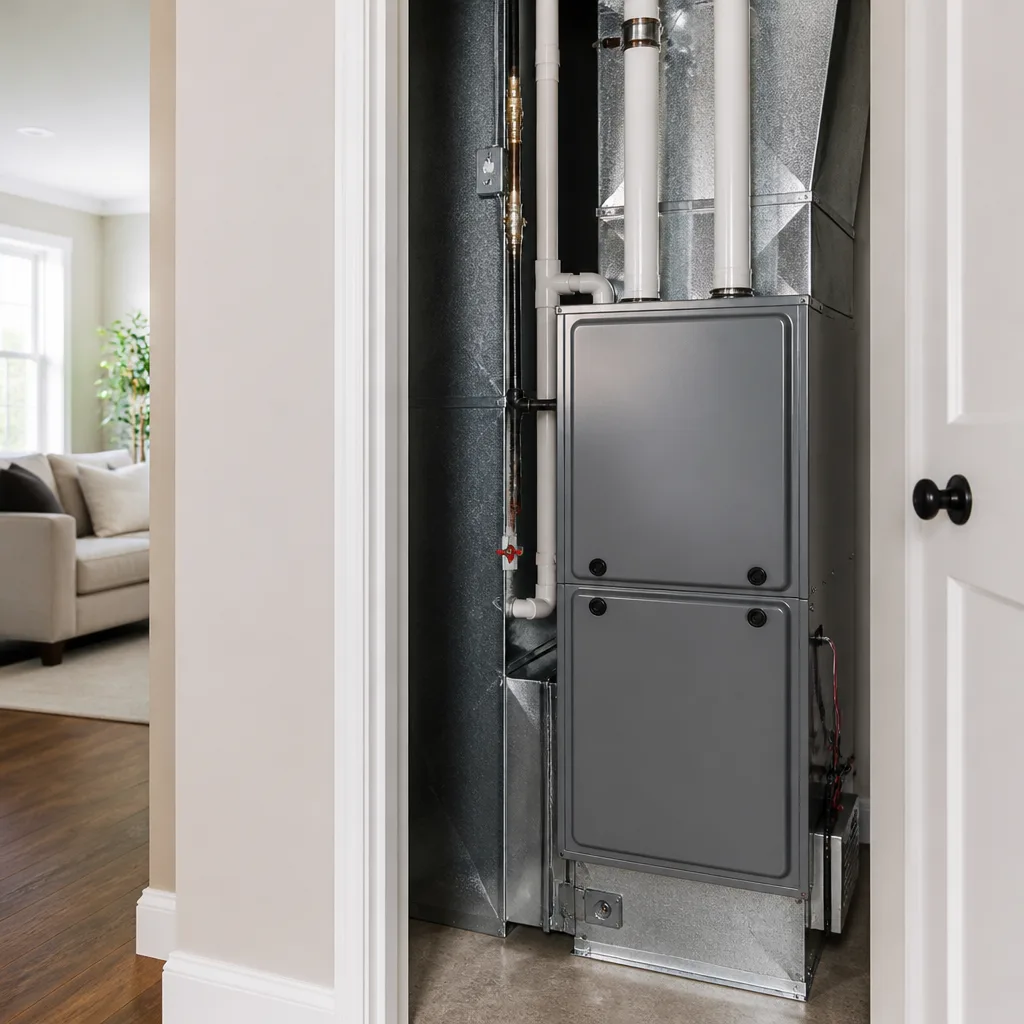 Furnace & heating
 AC repair
 Heat pumps
 Ductless mini splits
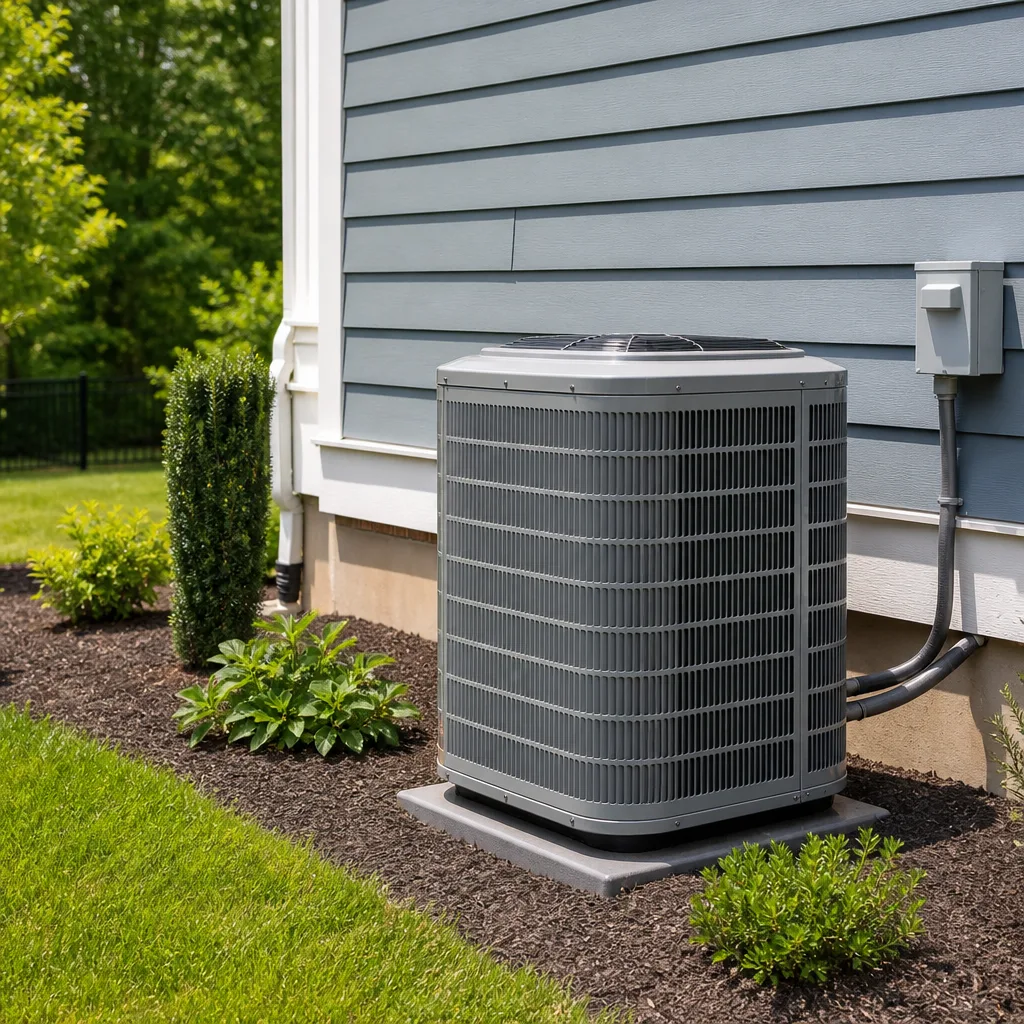 Carrier
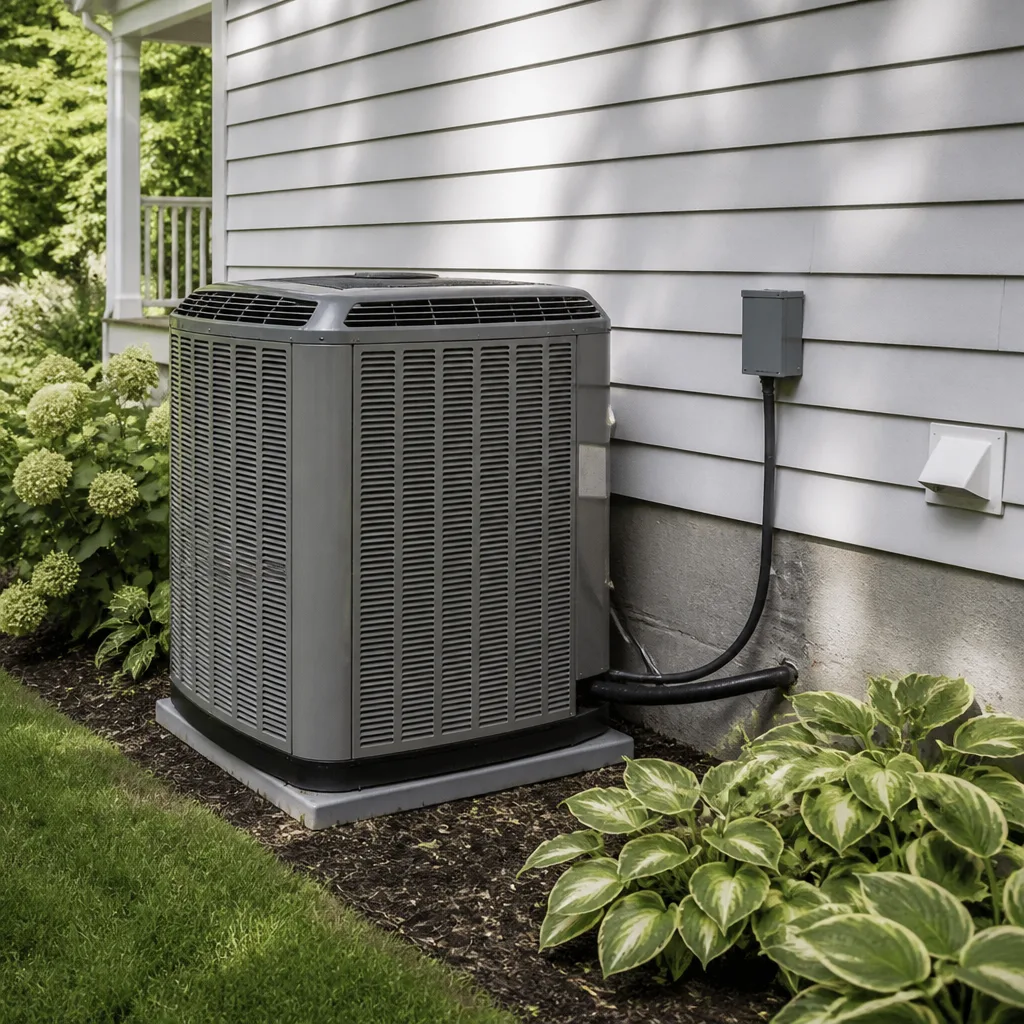 Trane
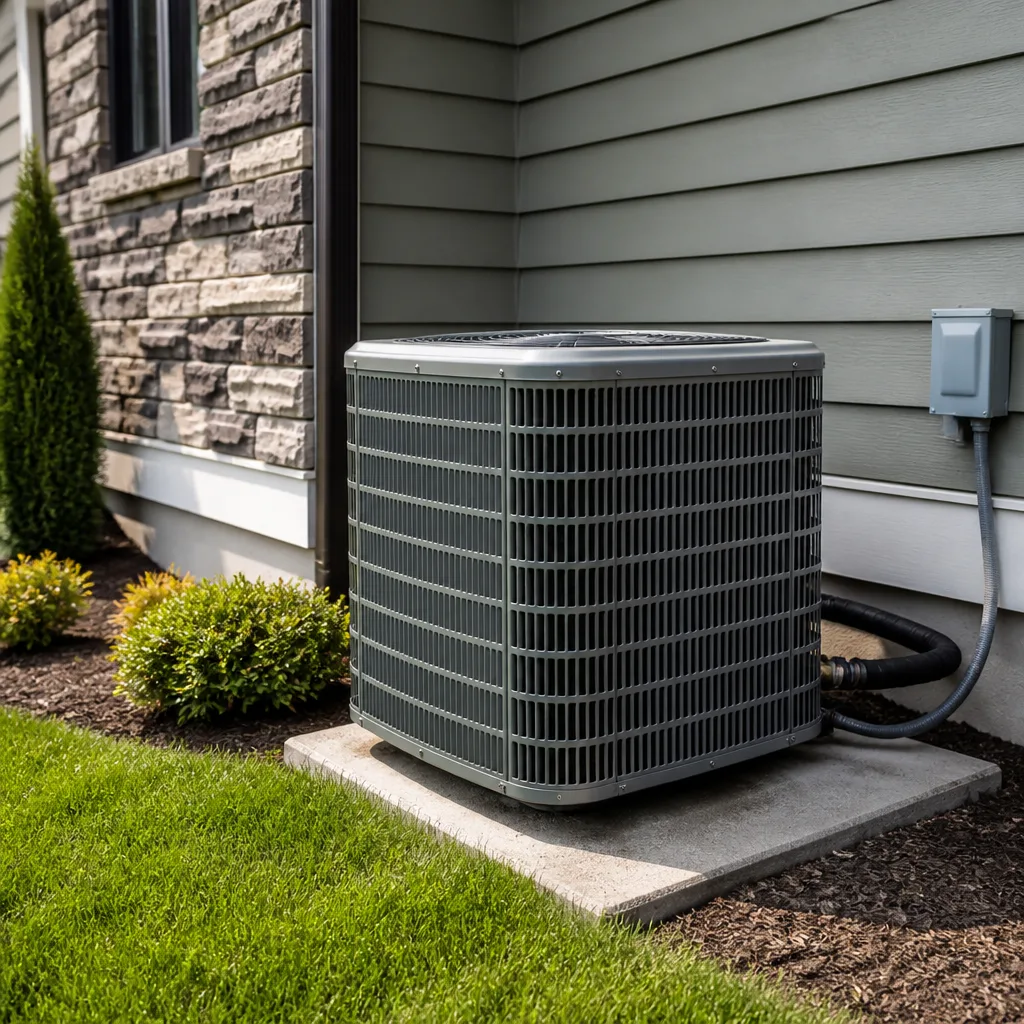 Goodman
Seasonal tune-up and full diagnostic on your Carrier, Trane, or Goodman system - readings shown to you before any repair is proposed
Diagnosis first, numbers second - you approve the repair price before a single part goes in.
Get your free estimateThe Complete Furnace Replacement Guide for Allen Homeowners
A 96% AFUE furnace pushing through leaky, undersized ducts doesn’t deliver 96% to your living room. It delivers something closer to 70% once the conditioned air bleeds into an attic that’s 130 degrees in August. That gap is the single most expensive thing Allen homeowners miss when they shop for a furnace, because it means the upgrade gets neutralized before the first gas bill arrives. A furnace is not a standalone box; it’s one component in a system that includes your ductwork, your attic insulation, your existing AC coil, and the way your house actually holds heat. This guide walks you through furnace replacement in Allen as a whole-home decision: what the equipment really costs, how to audit your ducts before you commit to a brand, which heat exchanger type makes financial sense at North Texas heating loads, and how Collin County permitting shapes your timeline.
Quick Answer
A furnace replacement in Allen typically runs $4,200 to $9,800 installed, depending on equipment tier and any duct or coil work that comes with it. The right choice hinges less on brand than on three things: an accurate load calculation for your house, a duct system that can actually carry the airflow your new unit needs, and a match between your furnace and your existing AC coil. Get those three right and a mid-tier furnace beats a premium model installed in isolation every time.
Styles & brands we work with
- AC repair
- Furnace & heating
- Heat pumps
- Ductless mini splits
- Carrier
- Trane
- Goodman
Table of Contents
- Why Allen’s Climate Rewrites the Efficiency Math
- Auditing Your Ductwork Before You Choose a Brand
- The Furnace-AC Coil Match Nobody Explains
- Single-Stage vs. Two-Stage vs. Variable-Speed
- Allen Permits and Inspection Timelines
- What Furnace Replacement Costs in Allen
- How a Replacement Project Actually Runs
- Brand Selection Without the Marketing Noise
Why Allen’s Climate Rewrites the Efficiency Math
Most furnace buying advice is written for Minnesota. Allen doesn’t have a Minnesota winter. We get hot summers that hang on into October, a handful of genuine cold snaps where lows drop into the twenties for a few nights, and a lot of winter weather in the forties and fifties. That heating profile changes what you should pay for.
AFUE measures how much of the gas you burn becomes heat instead of venting up the flue. A standard furnace sits around 80% AFUE. A high-efficiency condensing furnace runs 90% to 98%. In a northern climate with 5,000 heating hours a year, the fuel savings from that jump pay back the price difference. In Allen, where a typical heating season might run 1,200 to 1,600 hours, the math is tighter. The premium you pay for a 96% unit over an 80% unit doesn’t recover as fast, because you simply don’t run the furnace as much.
That doesn’t mean high-efficiency is wrong here. It means the decision needs to account for how long you plan to stay, what your ductwork can support, and whether your existing flue can handle a condensing furnace at all. A condensing unit produces acidic condensate and typically requires PVC venting rather than the metal flue your 80% furnace uses. Running new vent pipe through an attic or out a sidewall adds scope you should know about before the quote stage, not after.
- Short-term owners (under five years): an 80% single-stage or two-stage furnace usually makes the cleaner financial case in Allen.
- Long-term owners with tight ducts: a high-efficiency unit can make sense, but only if the duct system is sealed and the load calculation confirms the house actually needs the capacity.
- Homes with existing PVC venting or a sidewall path: the efficiency upgrade carries less added cost, which tips the math.
- Anyone with a duct system leaking more than a modest amount: fix the ducts first. The furnace choice is almost secondary.
Our technicians have up to 11 years of experience across nine major brands, and the pattern holds: homes that buy premium equipment without addressing airflow see less comfort improvement than homes that buy mid-tier equipment and fix the distribution first. If you want the wider context on how heating and cooling work together in this climate, the Highpoint AC Repair page covers the full scope of what we handle.
Auditing Your Ductwork Before You Choose a Brand
Before you pick a Goodman, Rheem, York, or Daikin furnace, find out whether your ducts can support it. A replacement that swaps a 100,000 BTU furnace for another 100,000 BTU furnace without checking static pressure and duct sizing is a guess, not an engineering decision. Here’s how a proper audit runs.
- Static pressure test. A technician measures pressure drop across the supply and return sides. High static pressure means the blower is fighting the duct system, which shortens blower motor life and cuts delivered airflow.
- Return air capacity check. Most Allen homes built in the 1990s and 2000s were designed with minimal return pathways. Undersized returns starve the furnace and drive up static pressure.
- Leak inspection at the plenum and trunk. Look for disconnected joints, torn flex duct, and unsealed boots at the register. These are the leaks that dump your paid-for heat into the attic.
- Duct sizing against the blower. A 60,000 BTU furnace moving 1,200 CFM needs duct cross-section to match. Undersized trunks strangle it.
- Insulation check. Ducts running through an unconditioned Allen attic need proper insulation. Bare or degraded duct wrap is a straight loss.
What disqualifies a duct system from supporting a high-efficiency unit? Three failure modes come up most. First, static pressure that already exceeds acceptable limits on the existing system; a condensing furnace with a more complex blower and secondary heat exchanger won’t fix a duct problem and can make it worse. Second, return air that’s badly undersized; high-efficiency equipment is more sensitive to airflow restriction. Third, flex duct runs that are kinked, crushed, or sagging beyond what the manufacturer’s installation instructions allow. Any of those three should send you to duct repair before you spend on the furnace.
If the audit comes back clean, you move to equipment selection with confidence. If it doesn’t, you now know your real budget. We handle furnace repair and replacement under one company, so the same team that diagnoses duct problems can quote the fix instead of handing you off.
The Furnace-AC Coil Match Nobody Explains
Your furnace sits directly beneath or beside your AC evaporator coil. Those two components share an air path. Replace one without checking compatibility with the other and you can void the manufacturer’s warranty on both, which is an expensive way to save a few hundred dollars on equipment.
Here’s why it matters. Manufacturers publish matched system ratings: a specific furnace paired with a specific coil and condenser produces a stated efficiency and capacity. An unmatched combination may still run, but it won’t deliver the rated performance, and in many cases the warranty terms require matched components. In Allen, where summer cooling load drives most of the annual energy spend, an undersized or mismatched coil cuts cooling capacity exactly when you need it most.
- Coil age and condition: if your existing coil is more than twelve to fifteen years old or has a history of leaks, replacing it during the furnace job costs less than coming back to it separately a year later.
- Refrigerant type: older systems using R-22 can’t be recharged affordably anymore. If the coil is R-22, the furnace job is the moment to plan the transition.
- Physical fit: a new furnace cabinet height and width must accept the existing coil, or you’re cutting and adapting, which adds labor.
- Refrigerant line routing: if the coil moves, the lineset may need modification. Confirm this at the estimate stage.
Ask for a matched system documentation sheet with your written estimate. A contractor who can produce one has done the compatibility work. If you’re planning AC work alongside the furnace, our AC installation team can coordinate both in a single project window so you’re not paying twice for the same access to the attic and plenum.
Single-Stage vs. Two-Stage vs. Variable-Speed: Which Makes Sense at Allen’s Heating Load
This is where most Allen homeowners overspend or underspend, depending on who they talk to. Here’s the honest version.
Single-stage furnaces run at full capacity or off. Nothing in between. They’re the least expensive to buy, have the fewest parts to fail, and handle Allen’s mild winters adequately. The downside is temperature swing: the house warms past the setpoint, then drifts down before the burner fires again. On very cold nights, that cycling is noticeable.
Two-stage furnaces run at roughly 65% to 70% capacity on most calls and ramp to full output only on the coldest days. In Allen, with our short heating season, a two-stage unit spends nearly all its runtime on low stage. That means longer, gentler run cycles, steadier temperatures, quieter operation, and lower electrical use from the blower. The added cost over single-stage is usually modest compared to the comfort gain, and it’s the tier we’d point most Allen homeowners toward.
Variable-speed furnaces use an electronically commutated blower motor that modulates across a wide range of speeds. The comfort is the best of the three, and the quieter blower is genuinely noticeable. But at Allen’s heating load hours, you’re paying a premium for modulation you may not run long enough each year to fully appreciate. Variable-speed makes the most sense in homes with zoned ductwork, significant square footage, or a homeowner who is sensitive to noise and temperature variation.
- Budget-first, short-term plan: single-stage, sized correctly.
- Most Allen homes: two-stage.
- Large homes, zoned systems, or noise-sensitive households: variable-speed.
- Any tier: correct sizing comes before tier selection. Oversizing any of the three causes short cycling and comfort problems.
Allen Permits and Inspection Timelines
Furnace replacement generally requires a permit, and in Allen the project runs through the city’s building department, which follows Collin County’s regional inspection patterns. We don’t quote specific timelines as fixed facts, because inspection scheduling varies with workload, but we can tell you what the process looks like so you can plan.
The permit is typically pulled by the installing contractor before work begins. The inspection happens after installation and covers venting, gas connections, electrical connections, and clearance to combustibles. A failed inspection means a correction and a re-inspection, which adds calendar days. This is precisely why the vent path and clearances need to be verified at the estimate stage, not discovered on install day.
- Confirm permit requirements with the city’s building department before signing anything.
- Verify the contractor pulls the permit in their name, not yours.
- Confirm venting plan is code-compliant for the equipment tier you selected.
- Schedule the install with buffer before inspection day.
- Keep the inspection documentation with your equipment records for warranty and resale purposes.
If you’re already working with us on other projects around Allen, we’ll fold the permit coordination into the same conversation so you’re not tracking two contractors and two schedules. Ask about permit handling when you request your free estimate.
What Furnace Replacement Costs in Allen
Typical installed costs for furnace replacement in Allen range from $4,200 to $9,800, with the spread driven by equipment tier, ductwork findings, and coil work. These are estimates, not quotes; the written estimate sets your final price.
- 80% single-stage furnace, straight swap, existing ducts in good shape: $4,200 – $5,600 installed.
- 80% two-stage furnace, straight swap: $5,200 – $6,800 installed.
- 96% condensing furnace, new PVC venting required: $6,800 – $9,800 installed.
- Duct sealing or repair discovered during audit: quoted separately after inspection; scope varies by leak severity.
- Evaporator coil replacement alongside the furnace: quoted separately based on coil size and refrigerant type.
Those ranges reflect what we see across the Allen market. Every job gets a written estimate with line items for equipment, labor, venting, and permit handling, so you can see where the money is going. Estimates are free. If you’re comparing bids, compare the load calculation and the static pressure test, not just the number at the bottom of the page.
How a Replacement Project Actually Runs
Replacement isn’t a drop-in swap. Here’s the sequence we follow.
- Load calculation. Room-by-room heat loss calculation determines correct furnace size, not square footage rules of thumb.
- Duct and static pressure audit. Findings feed into the equipment recommendation and any duct scope.
- Coil compatibility check. Confirm the furnace and coil match for warranty and capacity.
- Vent path verification. Determine whether existing flue works or new PVC venting is needed.
- Permit submission. Pulled before installation begins.
- Installation. Removal of old unit, placement of new, gas and electrical connections, venting, commissioning.
- Inspection. City inspection after install; corrections if required.
- Handoff. Documentation, filter schedule, and warranty registration.
Most Allen installations are completed in a single day once equipment is on site. The lead time is in the load calculation, permit, and equipment order, not the wrench time. That’s why rushing the first three steps is the most expensive shortcut available.
Brand Selection Without the Marketing Noise
We service nine manufacturer lines: Carrier, Trane, Lennox, Goodman, Rheem, York, Daikin, Bryant, and American Standard. That range matters because it means we’re matching equipment to your house and budget rather than steering you to whatever a single-brand dealer stocks. Goodman and Rheem tend to offer strong value in the standard-efficiency tier. York and Daikin have solid two-stage options. Carrier, Trane, and Lennox sit at the premium end with corresponding price tags. Bryant and American Standard fill in the middle.
The brand matters less than correct sizing, matched components, and competent installation. A well-installed Goodman furnace outperforms a badly installed premium unit every time. Ask what the contractor’s commissioning process includes, not just which badge is on the cabinet. We work on your brand and we’re already familiar with your system before we arrive, which shortens the diagnostic curve when your furnace needs repair down the road.
Common Mistakes to Avoid
- Buying efficiency without checking duct leakage. A high-AFUE furnace in a leaky Allen duct system delivers far less than its rating. Seal the ducts first or accept that you’re buying a number on a sticker, not comfort.
- Skipping the load calculation. Replacing like-for-like doesn’t mean the original size was right. Many Allen homes were oversized from the start, and carrying that forward keeps the short cycling.
- Ignoring the AC coil. Replacing a furnace without evaluating the coil next to it can void warranties on both and leave your summer cooling underperforming.
- Choosing a brand before choosing a contractor. Installation quality determines performance more than the badge. Interview the installer.
- Not asking about venting scope. If you’re moving to a 96% condensing furnace, PVC venting is often required, and that cost belongs in the estimate, not the change order.
- Forgetting the permit. Unpermitted work creates problems at resale and may void your manufacturer warranty. Confirm the permit is pulled.
- Overpaying for variable-speed in a small Allen home. The comfort gain is real but modest at Allen’s heating load hours. Spend that money on ducts if they need it.
See the difference
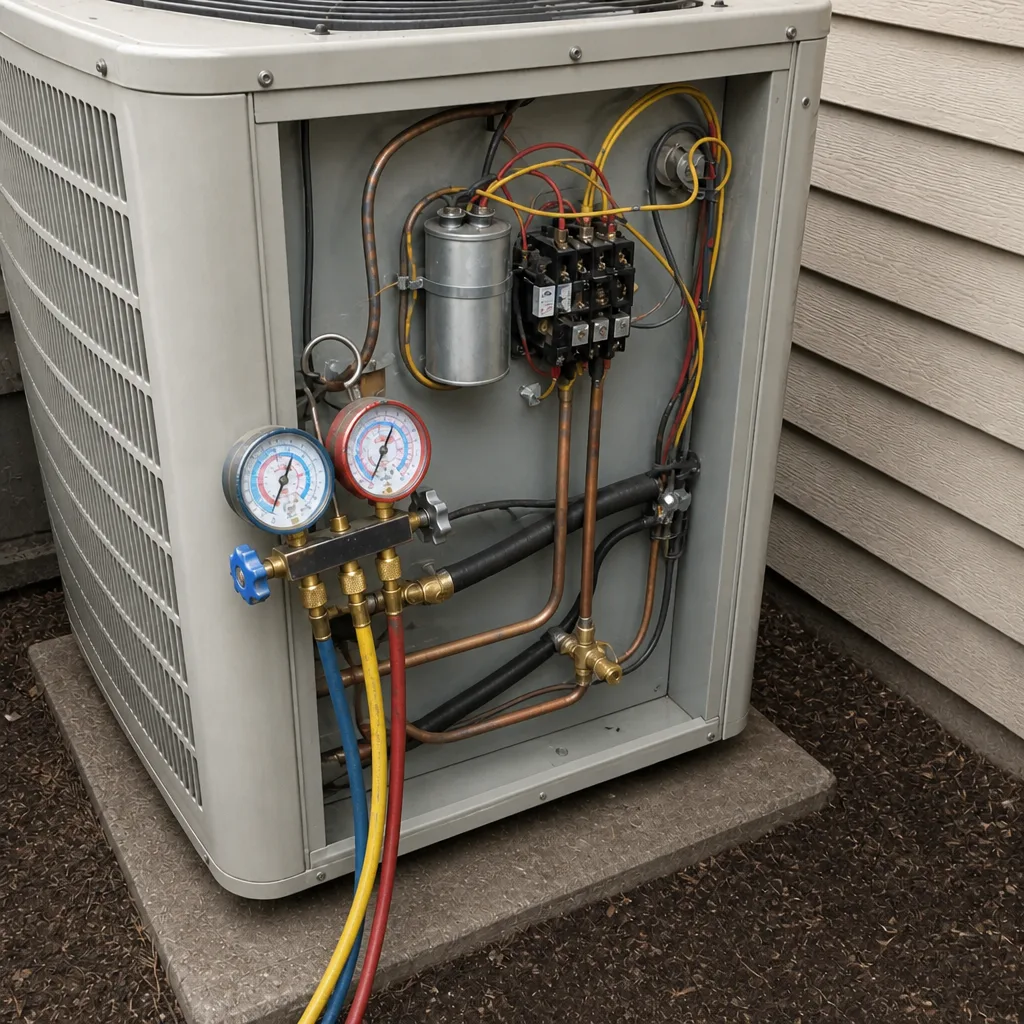
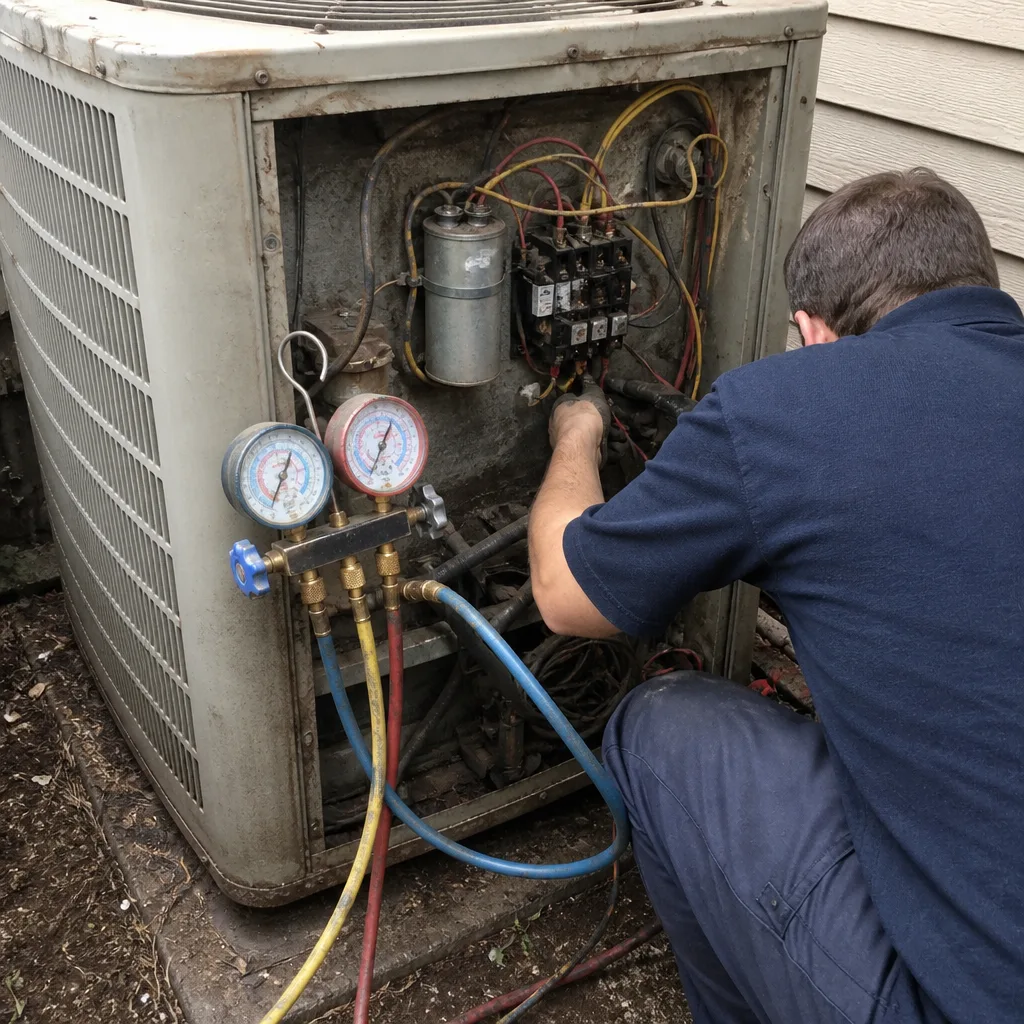 Before
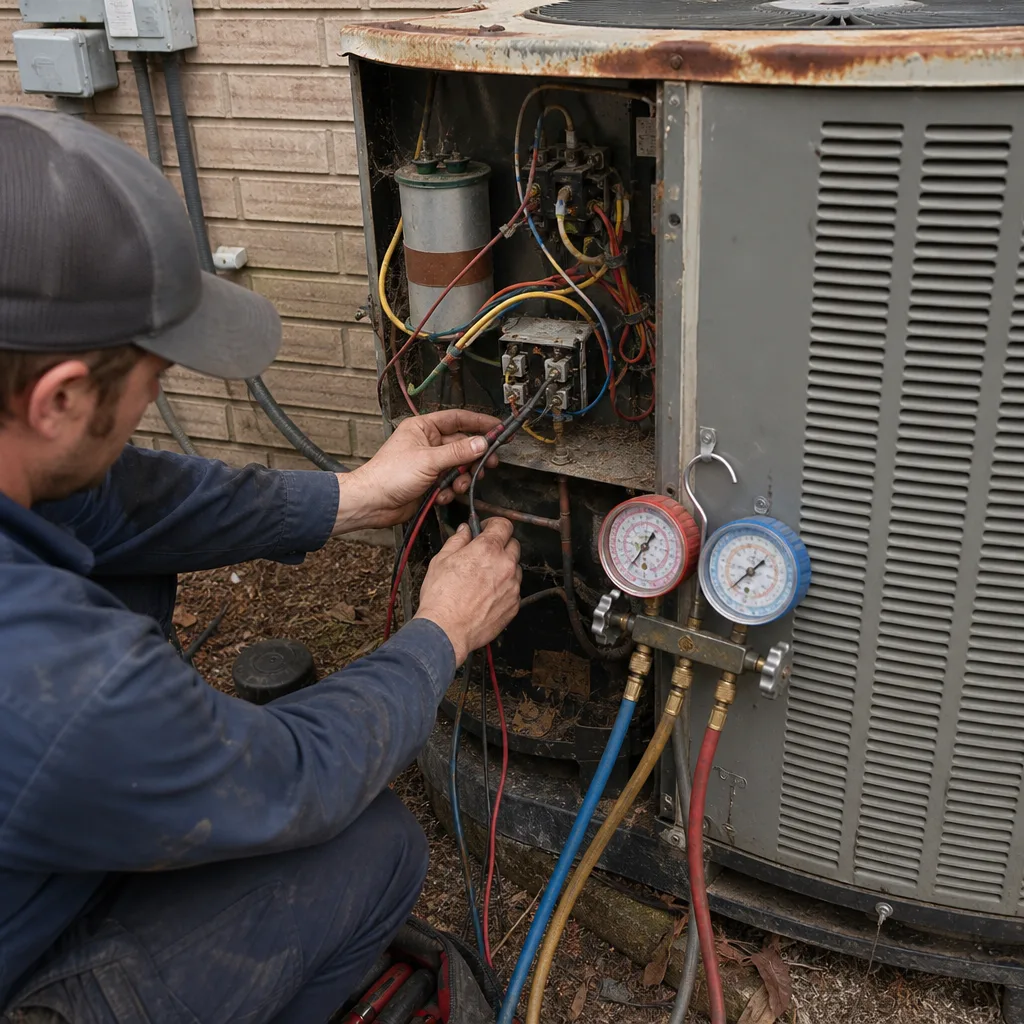
 After
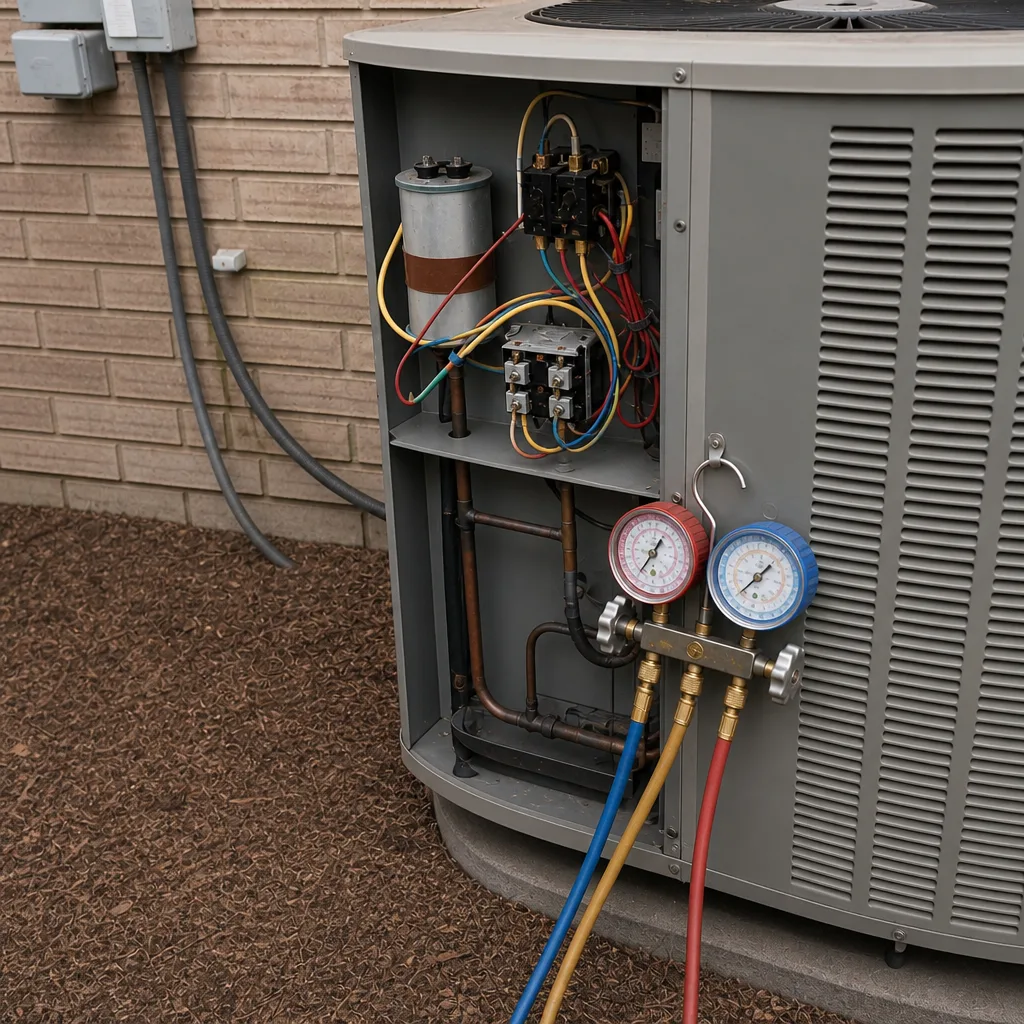
 Before
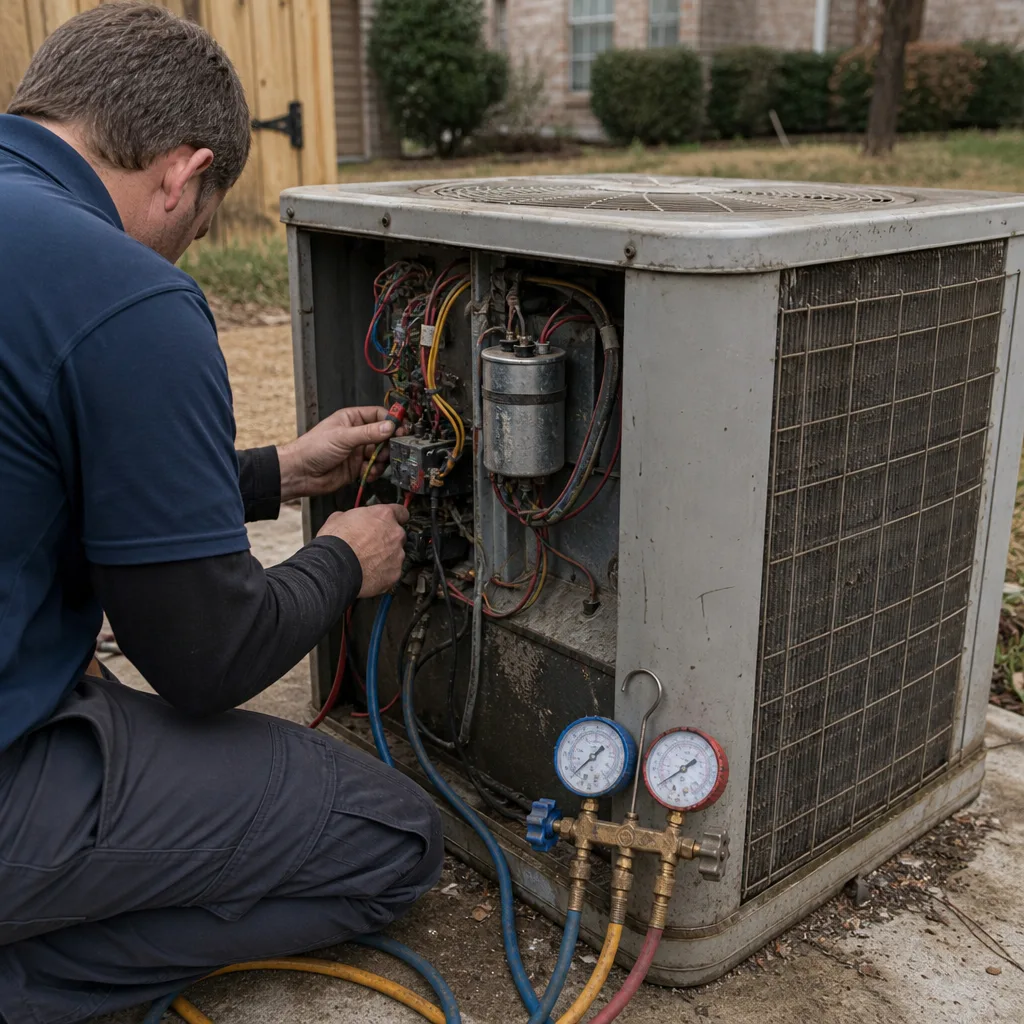
 After
 Before
 After
When to Call a Professional
Call a professional when your furnace is more than fifteen years old and has needed two or more repairs in the past two seasons. Call when you smell gas, when the heat exchanger is suspected of cracking, or when the unit trips the breaker repeatedly; those are safety issues and require qualified diagnosis, not homeowner troubleshooting. Call if the house has never felt evenly warm, if the second floor runs cold all winter, or if your gas bill climbed sharply without a usage change. Call before you buy equipment, so the load calculation and duct audit happen first.
Highpoint AC Repair offers free estimates in Allen – call (855) 752-3431. We answer 24/7. Fast dispatch from 7am to 7pm, Sunday through Friday.
Frequently Asked Questions
Typical installed costs in Allen run from $4,200 for an 80% single-stage straight swap to $9,800 for a 96% condensing furnace with new venting. Duct or coil work adds scope and is quoted separately. The written estimate sets your final price, and estimates are free.
Yes, furnace replacement generally requires a permit through the city’s building department, with inspection after installation covering venting, gas, electrical, and clearances. Confirm the requirement with the city and make sure your contractor pulls the permit in their own name.
It depends on the age and refrigerant type of your AC system. If the coil is more than twelve to fifteen years old or uses R-22, replacing both in one project usually costs less than two separate jobs and avoids the matched-system warranty problem. If the AC is newer and refrigerant-compatible, a furnace-only replacement is fine.
For most Allen homes, 80% AFUE is the financially sound choice because our heating season is short and the efficiency premium doesn’t recover quickly. A 96% condensing furnace can make sense for long-term owners, homes with existing PVC vent paths, or homes where duct sealing comes with it. The calculation depends on your specific heating load hours.
Most Allen replacements are completed in a single day once equipment is on site. The lead time comes from the load calculation, permit submission, and equipment ordering, so plan the calendar around those steps rather than the installation day itself.
We service nine manufacturer lines: Carrier, Trane, Lennox, Goodman, Rheem, York, Daikin, Bryant, and American Standard. That coverage means your equipment gets diagnosed by a technician familiar with that specific line, not someone reading the manual for the first time. Call (855) 752-3431 for a free estimate.
The Bottom Line
Furnace replacement in Allen is a system decision, not a shopping decision. Get the load calculation right. Audit the ducts before you commit to a brand. Match the coil. Choose the efficiency tier based on your actual heating load hours, not a northern-climate rule of thumb. Choose the heat exchanger type based on how your house holds temperature. Confirm the permit before work begins. Do those things and a mid-tier furnace will outperform a premium one installed in isolation. Skip them and the upgrade gets neutralized before the first bill. We’re here when you’re ready to see where your house actually stands. Call (855) 752-3431 for a free estimate. We answer 24/7. Fast dispatch from 7am to 7pm, Sunday through Friday.
Written by the team at Highpoint AC Repair.